
Don’t African countries need fossil fuels to develop, like the Global North?
*
Don’t African countries need fossil fuels to develop, like the Global North? *
African countries can build a cleaner, healthier and wealthier future with renewables: power from the sun, wind, and water.
The whole world is already facing severe climate impacts, and experts warn that no new coal, oil, or gas projects should be built if we want to avoid dangerous warming. All countries need to abide by this recommendation, or the people of all countries – including ours – will suffer.
All countries are urged to slash their emissions to reach the targets of the Paris Agreement. Dirty fossil fuels are already harming Africa. Air pollution kills 600,000 people each year, and climate disasters affected 34 million people in 2023 alone.
African economies are losing up to 5% of their income every year due to the extreme weather that climate change causes: floods, droughts and extreme heat.
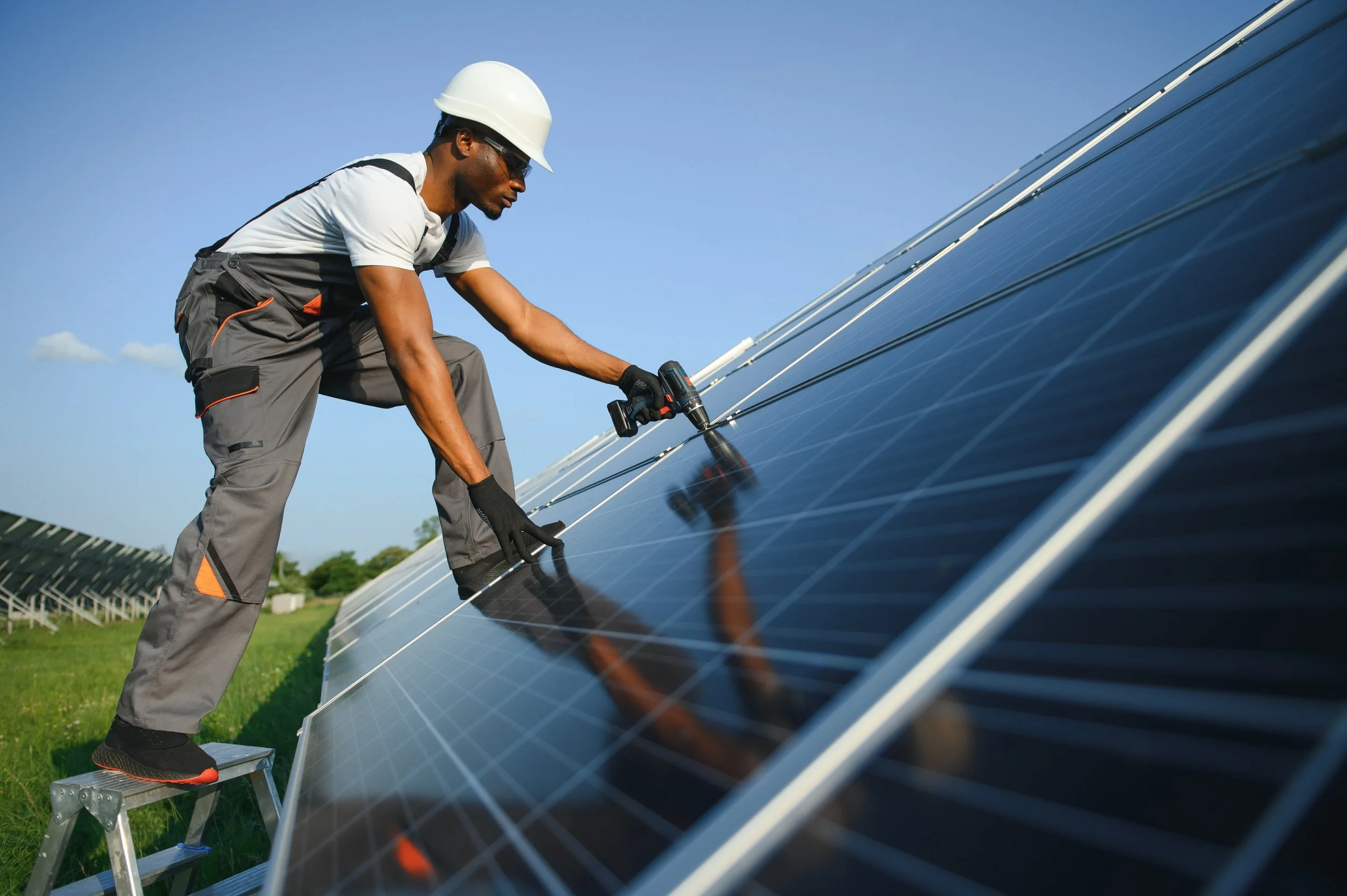
By choosing renewables, African countries can help to avoid the floods, droughts and extreme heat that are already killing large numbers of people on our continent and elsewhere. This is now possible! Renewable energy is reliable and cheaper to install than fossil fuels. This means it can provide cheaper electricity to citizens over time. It also creates far more jobs – and does not cause climate change!
A rapid switch to renewable energy will help African countries to prevent hundreds of thousands of early deaths from air pollution; grow their economies faster, and create far more jobs − all while helping to limit global warming.
Fossil fuels now mostly benefit a few elites, while causing long-term harm to everyone else.
Still not convinced?
-
The latest report by the United Nations Intergovernmental Panel on Climate Change (IPCC) state that all fossil fuels – coal, oil and gas – must be phased out urgently.
The International Energy Agency’s roadmap for net zero by 2050 finds that no new fossil fuel infrastructure need be developed anywhere. This roadmap limits global warming to under 1.5C by the end of the century.
Rich countries achieved most of their developmental gains before the global external costs of using fossil fuels became unsustainable and before renewable energy technologies matured into being a reliable and cheaper alternative.
Global climate agreements allow developing countries to continue using fossil fuels longer than developed countries. But these agreements evolved before renewable energy technology became as inexpensive as it now is.
-
Renewable energy creates more jobs than fossil fuels, (mostly semi-skilled and skilled), without the economic destruction that fossil fuels now cause.
Renewable energy also opens up more educational opportunities. By 2050, 30,000 people in rural South Africa could benefit from education programmes, on an ambitious decarbonisation pathway.
-
Fossil fuels are already devastating lives and making everyday people poorer (find details in the economy section below)
UNEP confirms that air pollution, largely caused by burning fossil fuels, kills 600,000 people annually across Africa.
Extreme weather disasters led to the deaths of at least 15,700 people and affected 34 million people in Africa in 2023, reports Carbon Brief.
-
African economies are already losing 2%–5% of their Gross Domestic Product (GDP) annually due to climate change.
If emissions remain high, the world’s per-capita (averaged per person) GDP will decrease by between 10-24% by 2100.
Hotter and Low-Income countries face disproportionately higher losses, estimated at 30–60% above the global averages above.
Conversely, if warming is limited to 0.01°C per year (consistent with Paris Agreement goals), the world could see a 0.25% global income gain.
Renewables grow more economic resilience than fossil fuels, which have risky supply pipelines, face volatile international markets, and need an ongoing supply of fuel throughout the plant's lifetime. In addition, using green domestic electricity to produce export goods can improve their competitiveness in markets that increasingly favour low-carbon production, particularly under policies such as the EU’s Carbon Border Adjustment Mechanism.
-
By taking the necessary action to curb emissions and address air pollution, African countries could:
Prevent 200,000 premature deaths each year by 2030 and 880,000 premature deaths annually by 2063, UNEP predicts
Improve food security by reducing desertification and increasing crop yields for rice, maize, soy, and wheat
Contribute significantly to global efforts to keep warming below 1.5°C, limiting the negative effects of regional climate change, which are expected to be particularly extreme in Africa..
The only economically sustainable path forward is for least developed countries to leapfrog over the outdated fossil technologies that developed countries used to build their current prosperity.
Fossil fuel use now creates prosperity for a select few at greater cost to everyone else and future generations.