
Future We want
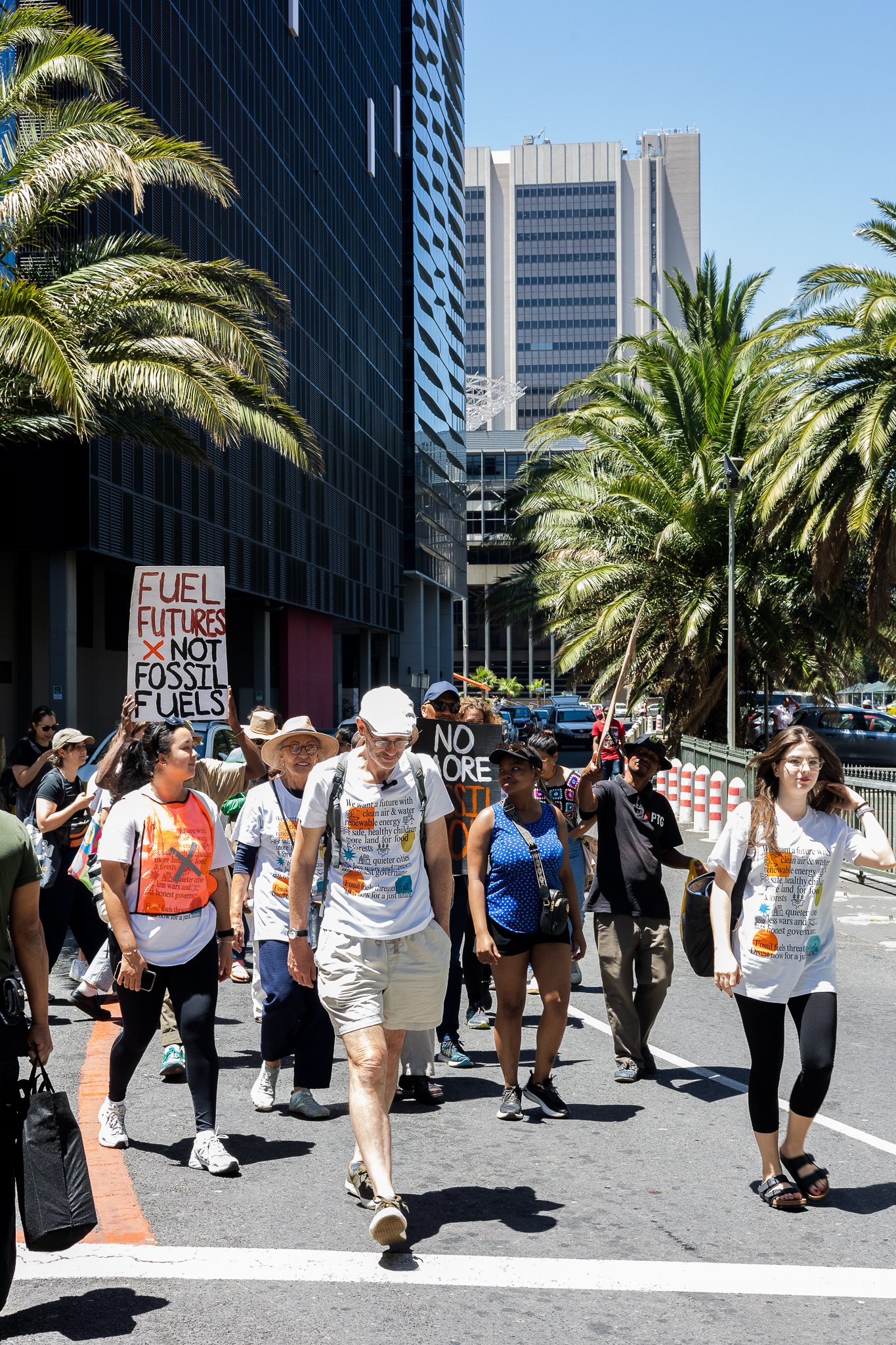
We engage financial institutions and citizen investors to help shift the social licence and flow of capital away from fossil fuels, and towards energy democracy in South Africa. Our tactics include shareholder activism and engagement with asset managers, popular education and tool building for citizen investors and shareholders, as well as public awareness through campaigns and mobilisations.
For a more detailed history of this campaign going back to 2018, you can view all our campaign timelines here.
DIVEST FROM FOSSIL FUELS
·
INVEST IN THE FUTURE
·
DIVEST FROM FOSSIL FUELS · INVEST IN THE FUTURE ·
-
What do we mean by energy democracy?
A democratic energy system in South Africa that is:
Mostly renewable, community-led and owned
Human rights- and rule-of-law based
Science- and evidence-based
Able to provide greater economic equality and decentralisation
Able to build resilience
South African Constitution (Ch. 2, 24): All have the right: "to an environment that is not harmful to their health or well-being"
"to have the environment protected, for the benefit of present and future generations"
-
How does responsible finance advocacy get us there?
The finance sector has a disproportionately large influence on the social license of companies like fossil fuels, as well as on the cost of capital and ability for extractive companies to do business.
Nearly 13 million South African citizen investors have a potential direct ‘vote’ on climate via their investments and savings but South Africa has a limited tradition of ethical or sustainable investment, and few socially responsible investment options.
As activist Kumi Naidoo rightly says: "Whether it is averting climate change, addressing the deepening inequality in the world, addressing gender inequality, as well as other struggles, following the money offers us the greatest promise for impact. To avert catastrophic climate change, we need to follow the money"
-
Our strategies to achieve this
Shareholder activism & engagement with asset
managers
Popular education & tool building for citizen investors and shareholders
Public awareness through campaigns, mobilisations and media engagement
Legal and para-legal action with partners Just Share and Open Secrets
Working with financial service providers to encourage the development of responsible, decarbonised investment vehicles
our impact to date
-
![]()
Championing low-carbon investing
We co-developed one of South Africa’s first dedicated low-carbon funds, the BCI Select ESG Equity Fund. This fund has maintained a benchmark-beating performance record for over three years, and was one of the top three best-performing equity funds in South Africa over 2025-6, proving that divestment does not require a “performance sacrifice” in our market.
-
![]()
Building people power
We have hundreds of sign ups from citizen investors who are signed up to our #FutureWeWant campaign, and who actively engage with out asset manager advocacy.
-
![]()
Conscious Capital training
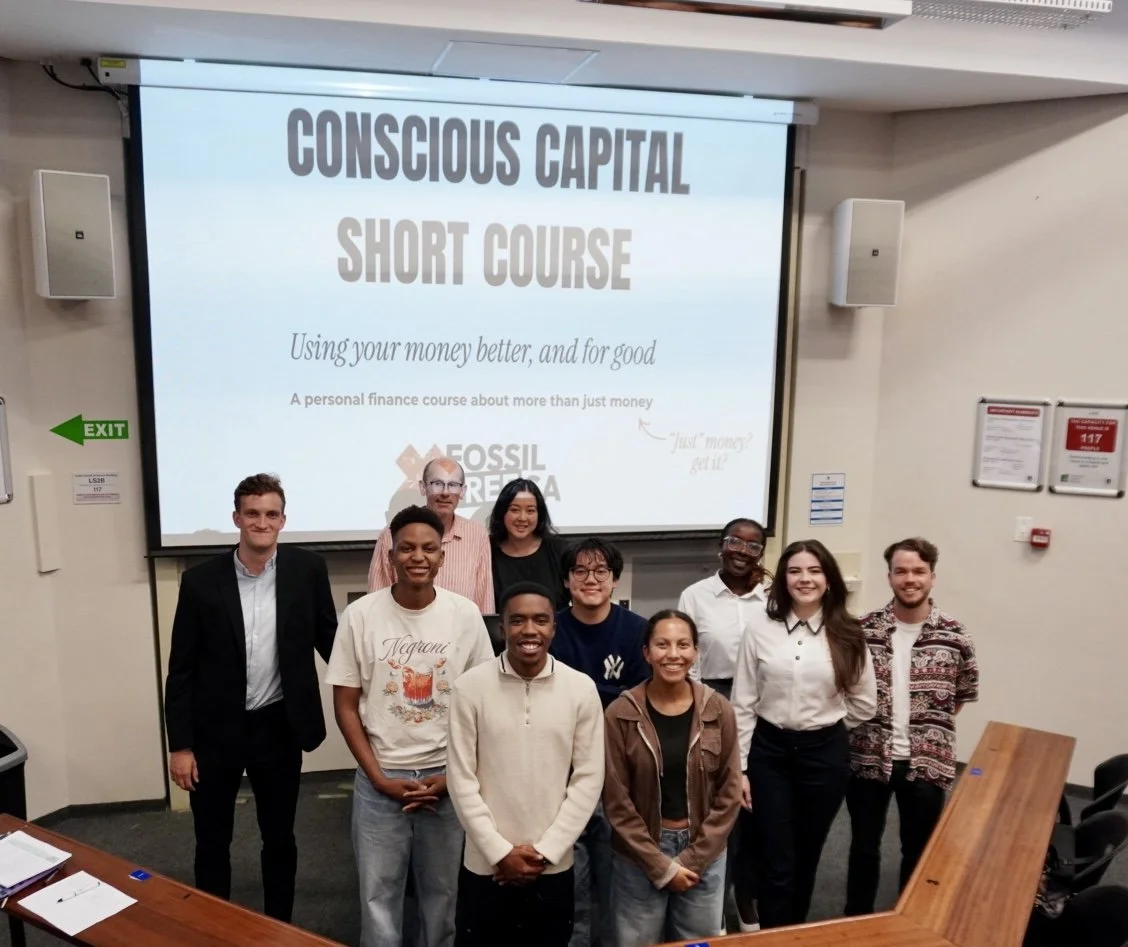
We successfully launched the "Conscious Capital" personal finance course in early 2026. The inaugural cohort exceeded 100 participants, empowering individual South Africans to align their private savings and retirement annuities with climate justice.
-
![]()
Capacity building
We conducted high-level technical workshops in 2017 and 2019 for assets managers and pension fund trustees, influencing the ESG strategies of major South African investment houses.
-
![]()
Recent financial sector engagement
This year, we have engaged Coronation, the JSE, Exxaro twice, Standard Bank, and Sanlam. Over 2025, we formally engaged five major asset managers and the JSE Limited to advocate for enhanced carbon disclosure requirements and the listing of fossil-free investment vehicles.
-
![]()
Challenging political interests
In 2025, in collaboration with Open Secrets, we used PAIA (Promotion of Access to Information Act) requests to demand transparency from the Political Office Bearers Pension Fund. After the fund initially declined to disclose its fossil fuel exposure, we escalated the matter to the Information Regulator, turning the pension fund of South Africa’s MPs into a focal point for national climate accountability.

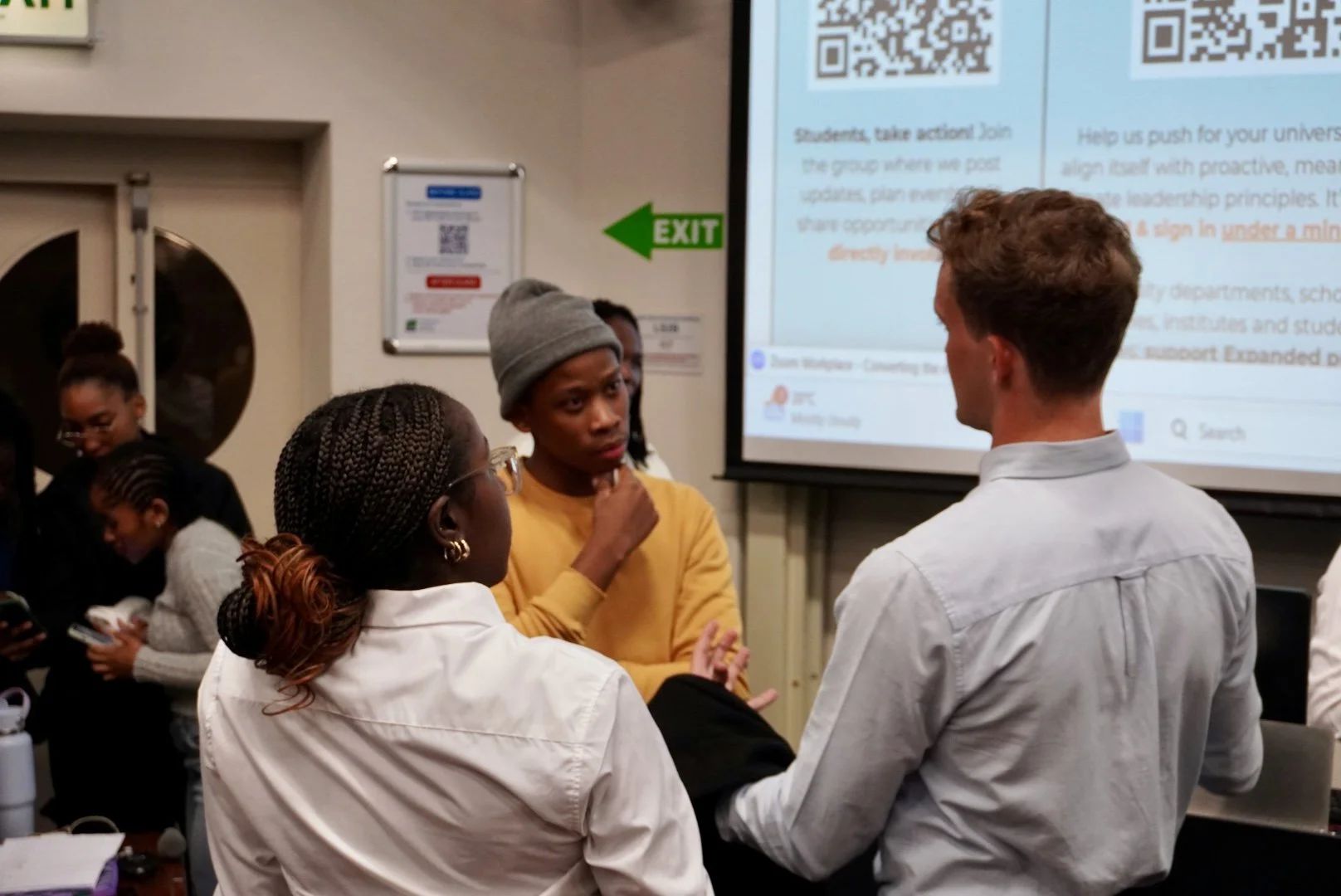
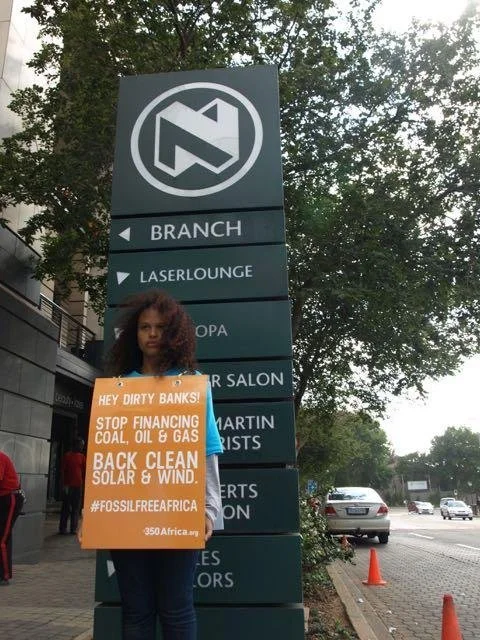
some of our campaign tools

Planet A Investment Guide
A practical guide to more ethical and sustainable investment and fossil fuel divestment for South Africans who want a liveable planet and healthy society. The latest edition is from October 2024, and comes with a handbook.
Our handbook introduces the guide and provides practical steps
towards divestment. This lists only three South African funds (international funds are in the full guide).
The full-length version includes funds available in South Africa which invest in emerging, global and offshore markets (with explanations of the differences between these categories and a host of other helpful information).
Conscious Capital course
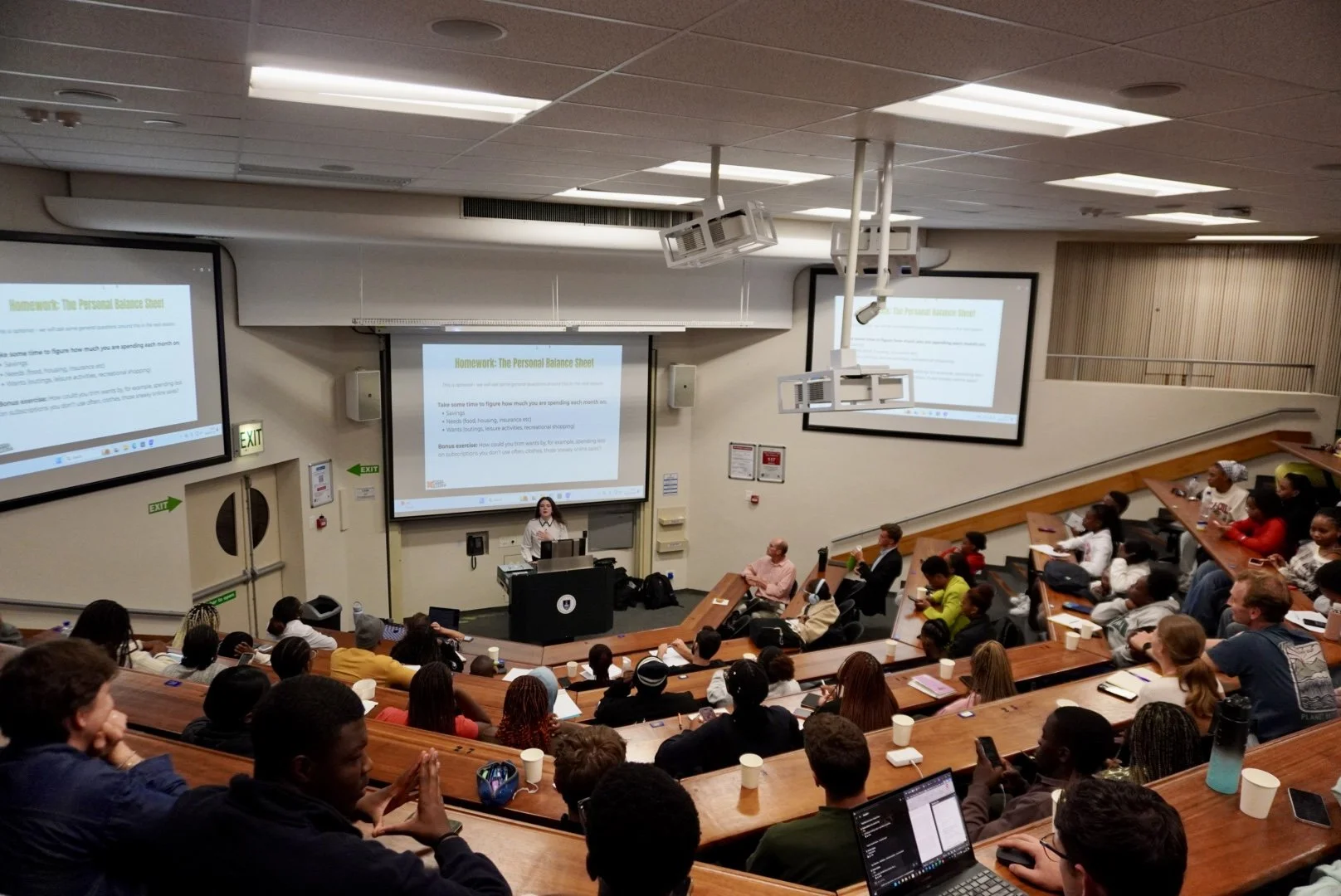
A hybrid four-session course on socially conscious personal finance, Conscious Capital is exploring how to manage our money and become more financially secure in ways that also support the prosperity of others. It’s the latest project in our expanded climate finance campaign, now called Future We Want because redirecting financial flows is essential for creating this future.
This work integrates more broadly with our Campus Climate Leadership campaign and is currently running successfully at UCT with potential for expansion to other universities. Conscious Capital integrates deep knowledge of the globally sustainability crisis with the basics of personal finance, not without having to navigate contradictions.
To our knowledge, this course is unique not just to South Africa, but possibly globally. Find session 1, session 2, and session 3 here.
Climate Hope
Why is electricity so expensive in South Africa? Do we still really need coal, gas and oil to "keep the lights on"? How is climate change damaging our economy and jobs? What are the links between our energy system and our mass unemployment? Our #ClimateHope campaign is busting climate myths while publicising a host of truths about these issues and more, to highlight the best pathways to a stable climate and an economy in which we can all flourish. If well understood, these insights can empower us to build such a future. Visit the resource here.
Tell your asset manager that you want fossil fuel-free investments!
Testimonials
-
Diaan Janse van Rensburg: managing director, Naviga Solutions (2024):
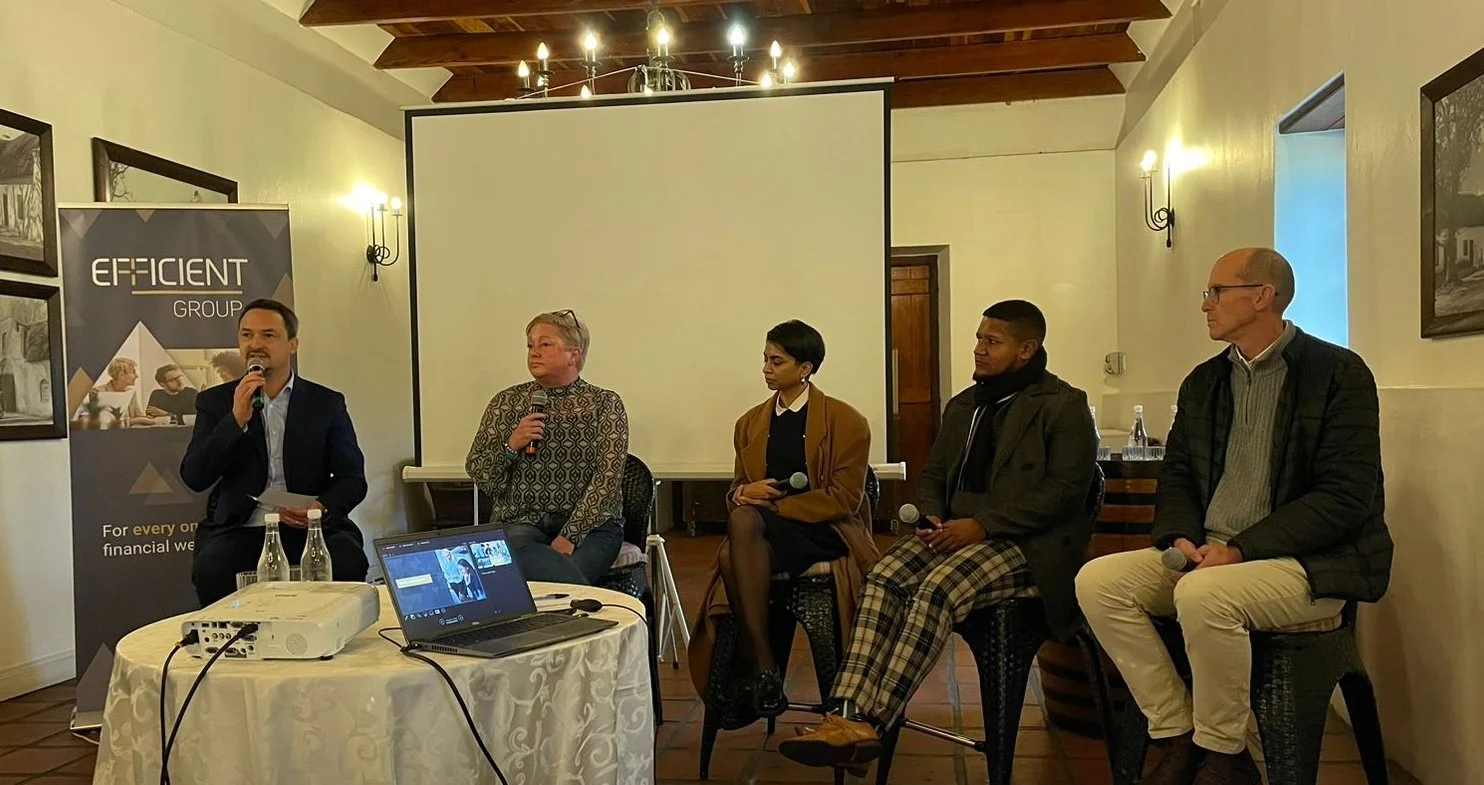
“Traci Porter, from Efficient Wealth, and I started meeting with David Le Page, co-ordinator of Fossil Free South Africa, five years ago to discuss starting our Select BCI ESG Equity Fund. We spent countless hours discussing what should be excluded and how to go about launching a fund that was not just greenwashing. David’s knowledge and his willingness to teach us about what divesting from fossil fuels means, and what the very real implications of climate change are, were invaluable. Every question was answered with measured care and supported with facts.
Thanks to David’s advice and input (along with a few other amazingly knowledgeable people), and the resources and people of Fossil Free South Africa, our fund was launched 18 months ago and is performing well, even though [SA’s petrochemical giant] SASOL is excluded from it.”
-
Lameez Hyman: former climate reporter, News24:
“[Fossil Free South Africa] has served as a credible source of information for my reporting. They're a true David versus Goliath story – taking on the big polluters while raising awareness about the climate crisis – and that should continue to be supported.”
-
Brad McWalter: director, McWalter Advisory
“As a certified financial planner and director of a licensed financial services provider and someone who cares deeply about our natural environment, I've come to think of David and Fossil Free SA as Earth Knights playing a meaningful part in the most important battle in human history.
He and his team are invaluable to both planet and future proofing industry. I've found David's insights to be purposeful, practical, relevant, qualified, and unbiased. Their impact on progress toward a sustainable future has been substantial, so much so that the opportunity to have them weigh in on the topic in any capacity should be highly prized.
In todays' world, there are people that say they care about the environment and people who mean it, then there are some that do something about it as well. David and Fossil Free SA are one of these latter fellows. Their endeavours help me sleep at night; they give me hope for a better future.”
Upcoming events
Past events

News






Your questions answered
-
Continued investment in fossil fuels poses the following grave risks to both investors and society at large:
Continued under-investment in the green economy needed to avert the worst dangerous climate change.
Continued social licence for an industry that has become very dangerous, exploitative and corrupt.
Continued decline or crippling of the South African economy by the negative external effects of fossil fuels: climate breakdown, missed development opportunities, economic volatility, deadly air pollution, excessive water use, continued corruption, poor governance (strongly associated with these industries) and global (the fossil-fueled Ukraine war) and regional conflict (the insurgency in Mozambique).
Loss of returns on investments due to these factors (asset stranding).
Missed opportunities for investments in the green economy.
Possible sharp loss of capital in a carbon bubble scenario.
-
Fund managers are the financial specialists who decide how most of the money you save in your retirement fund or unit trust is actually invested: e.g., how much of it goes offshore, how much is invested in bonds, how much in property, how much in which companies.
Fund managers have enormous power in society. As one SA asset manager says, asset managers “decide how the valuable savings or resources of a population are allocated for growth and development”. But at the moment, South Africa’s asset managers have effectively allocated many of our resources not for a thriving economy and healthy environment, but for a crippled economy and devastated environment. They didn’t do this maliciously or deliberately. But they’re still applying the investment logic of the 1960s when the evidence is now overwhelming that this is a recipe for disaster. Many of them are very concerned about climate themselves, but say they need you, the asset owners, to first start noisily demanding this kind of change so they can beat institutional inertia.
None of them, to our knowledge and despite their purported concern over climate change, have meaningfully educated or canvassed their clients on the issue.
Overseas fund managers do already offer many fossil-free investment options. They’re easy to find if you live in the US, UK, Europe or Australia. The world’s biggest asset manager, Black Rock, has also to some degree made addressing climate change a priority. But there are still no fossil fuel-free options for ethical and responsible South African investors. We have to change this. In the long term, all investment should be responsible (or better regulated).
So-called ESG investment can be helpful, but can also be a mass smokescreen for inaction and greenwashing. We like ESG mostly only when it leads to outright exclusion of the worst permitters.
South Africa’s biggest asset managers collectively manage over R2.7 trillion. Over 10 million South Africans participate in various forms of collective investment via savings, retirement funds and unit trusts. Even more are connected to financial services. This represents enormous potential power for creative change, if even a small proportion of this capital is redirected towards truly environmentally and socially responsible investment.
-
Of course. You have standing wherever you have money invested.
-
We’re still some way from seeing actual fossil-free funds created. It’s possible you may get lower returns, but there are many good reasons to think that fossil-free funds in South Africa can get acceptable or even improved returns. The two substantially fossil-free funds that we are aware of are delivering acceptable performance. Divesting will help protect you against stranded assets and the sharp loss of returns threatened by a possible carbon bubble.
-
Yes, we’re all still dependent on them. But we have to phase them out very fast, in favour of reduced energy demand and renewable energy sources such as wind and solar. We’re NOT asking that all fossil fuel companies shut down overnight, just that they start cutting their emissions at the speed that scientists have figured out is needed to keep average global warming below 1.5C; that is, at least 7.6% emissions reductions annually. Unfortunately, despite their claims, few if any are doing so.
The divestment movement has fostered many climate activists who have gone on to work in new arenas, such as Extinction Rebellion and Greta Thunberg’s FridaysforFuture.
The social and political nature of fossil fuel divestment (and its links to our own anti-apartheid struggle in South Africa) has been very well explained by Robert Massie, a senior advisor from Boston Common Asset Management in the US, speaking in 2015.Well, I’ve heard [this claim] that divestment is ineffective and I would like to suggest otherwise. Taking the South African case, where I wrote a 700-page book on it, it’s absolutely true it had no effect on the stock price and that’s totally irrelevant. At no point during the South African divestment or in the fossil fuel movement does anyone care about the stock price of these companies. If you look at it through finance, you see no effect and therefore you conclude that there’s been no impact. But if you look at it through the discipline of history, you see that it’s incontrovertible that step by step by step it was the South African divestment movement that changed the public discourse, that transformed the decisions of corporations to get out of South Africa and our government, led by a Republican Senate, to pass a comprehensive sanctions bill. Well, one of the things that’s fascinating about it is that climate change has been one of those problems where we’ve been hoping that someone else would do something about it. But divestment has the impact of saying, what are your direct responsibilities? If you own stock in Exxon, if you’re receiving dividends from Exxon whose business model is to destroy the planet, do you feel comfortable with that? Do you endorse what they’re doing? Normally, when you own a stock, you’re endorsing their business plan. And so instead of pushing this off to someone else, it transforms people and institutions exactly as a democracy should.
-
We’re not saying the asset managers should immediately sell off all their Sasol shares if they and most of their clients don’t want to. We’re just saying they should make it possibly for those of us who do want to divest, to do so more easily.
-
We think any credible fossil fuel-free fund also needs to exclude destructive industries such as tobacco, armaments and intensive meat production; and that all investable companies should be screened to ensure they score well for their environmental, social and governance (ESG) practices.
-
Please do connect with us and ask. We’re big on dialogue and low on judgement.
We still haven’t answered your question? Get in touch or see our divestment uber-FAQ here.