
Climate media lab
The Climate Media Lab (CML) is a programme to empower journalists and content creators to report accurately and proactively on the climate crisis, through ongoing individual mentorship and a series of seminars.
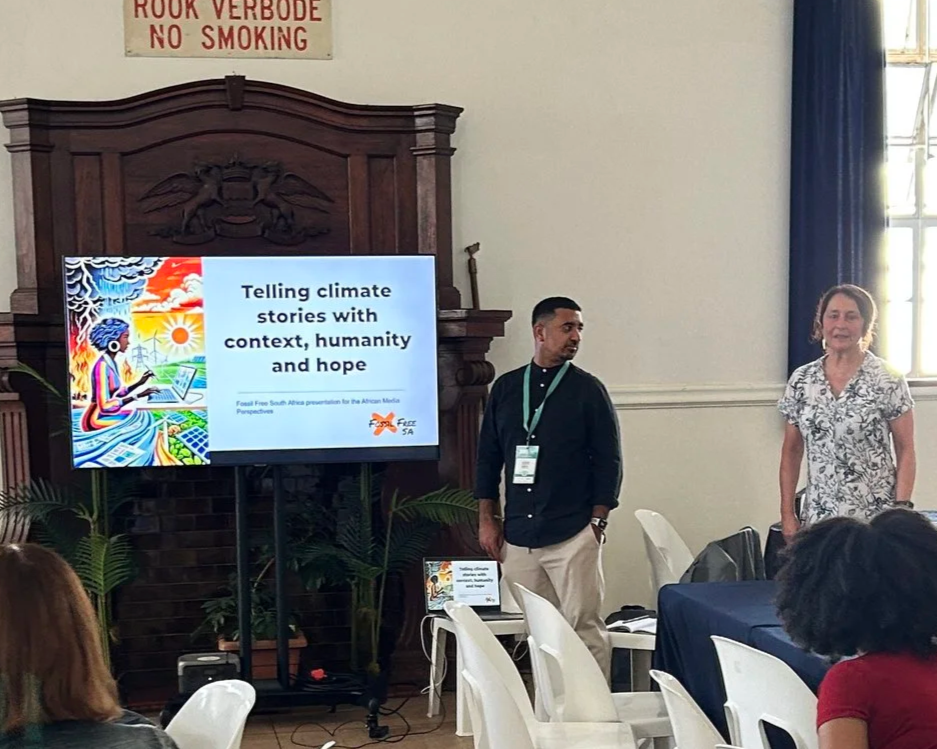
The current media landscape
The media landscape is shrinking. There are far fewer climate journalists and editors than in previous years.
Media tend to focus on topics like politics, business, sport and breaking news, without understanding that climate cuts across all sectors.
Climate reporting is focused on events and is generally reactionary, and climate context is often left out, even in disaster stories.
Why target media for climate action?
Research shows that most South Africans are aware that the climate crisis is unfolding, but not about what causes it, nor the solutions. The media plays a crucial role in public education on climate.
our strategies
-
The core of the Climate Media Lab is a one-on-one mentorship programme in which seasoned climate reporters guide journalists and content creators to produce and publish high-quality and accurate climate stories.
The mentors each meet with their seven or eight fellows every fortnight, at the least.
-
A series of seminars on issues from climate science basics to “round-the-campfire chats” with top science writers, and how to cover COP events.
These seminars are held monthly. Participants say they value them greatly, with one reporting they are “the highlight of my week”.
-
Annual updates of our Climate Reporting Guide for South African Media.
This guide is a living document, open to feedback. The celebrated science writer Leonie Joubert has praised it as “the go-to place for any journalist reporting on climate change.”
We will ask the fellows’ how they used the guide at the end, and their suggestions for improvement, at the end of the programme.
-
Monthly Climate Beat SA newsletters giving climate storytelling tips, climate science updates, and new resources.
All the CML fellows, and many other journalists, receive Climate Beat SA, which aims to be South Africa’s authoritative publication on climate storytelling.
some of our campaign tools
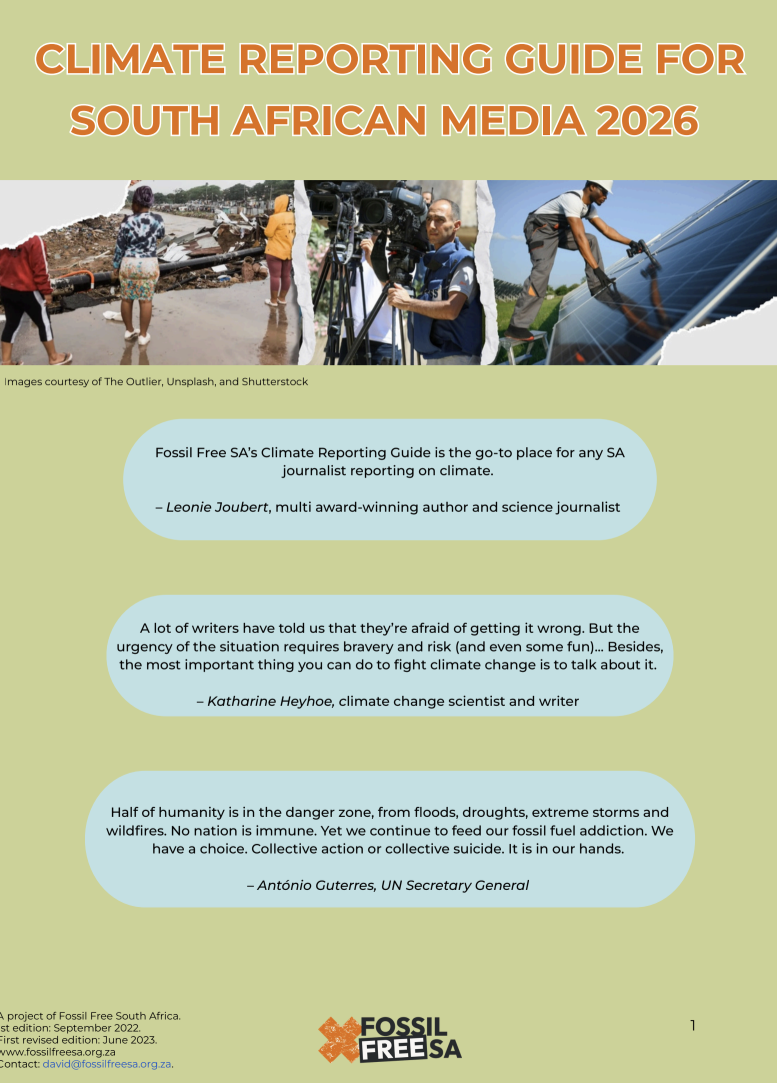
Climate Reporting Guide for South African media
Fossil Free South Africa produces a Climate Reporting Guide for South Africa, giving journalists key information on climate science, how climate impacts their audiences, the important pillars of good climate storytelling, and a host of other useful information including experts to consult and further resources.
This guide refers to local and international best practices and cross-references international climate storytelling resources. Read the updated2026 guide here, and the 2024 guide here. We have previously produced a similar guide for journalists working in Mozambique and a pan-African edition.
Climate Hope
Our Climate Hope resource busts a host of myths about energy that pervade the media and conversations in South Africa, and publicises the evidence-based truths. Why is electricity so expensive in South Africa? What is the effect of climate change on our economy and jobs? Are they any links between our energy system and our mass unemployment? These are some of the issues of ongoing concern that Climate Hope investigates.
Myths range from “African countries still need fossil fuels for development” to “natural gas is a good transition fuel, so we don’t have to rush the Just Energy Transition”. This in-depth resource is of particular use for journalists, who frequently have to tell stories about climate change, energy, and the public good.
Climate Beat SA newsletter
Crafting a newsletter that serves as a valuable resource for all subscribers interested in climate change developments, climate journalism and storytelling, and updates on what the Climate Media Lab fellows and mentors are up to. Climate Beat SA delves into important topics like South Africa’s Just Energy Transition, the El Niño that is set to hit soon, and tips for producing climate stories. It also features important reads in the climate journalism space.
Recently published pieces by our fellows
How South Africa’s rotting food waste is driving climate change
– By Tamlyn Cramer for Zululand Observer
How the US-Israel-Iran Conflict Is Reshaping South Africa’s Coal Exports
– By Shaazia Ebrahim for Mail & Guardian
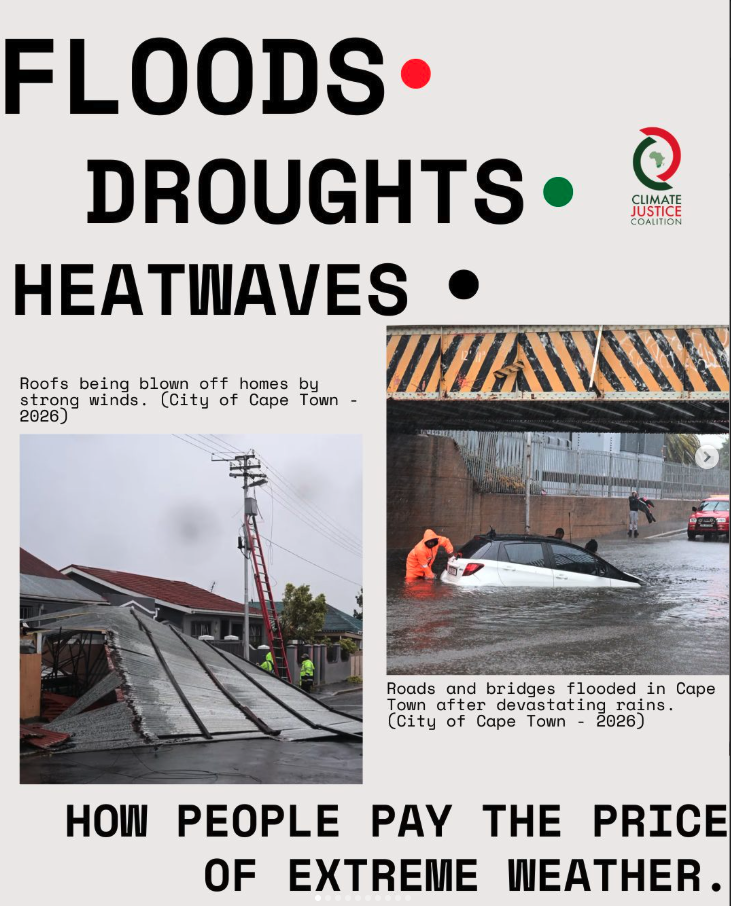
Floods. Droughts. Heatwaves. How people pay the price of extreme weather.
– By Shaazia Ebrahim for the Climate Justice Coalition
‘Waste lords’ have turned Joburg’s old dumps into toxic criminal havens
– Cowritten by Tulani Ngwenya for Sunday Times
HPV vaccinations, MPXV reservoirs, climate change and childhood nutrition, malaria-related anaemia in pregnancy and the spread of cholera: A selection of recent findings from across Africa.
– By Engela Duvenage for Nature Africa
Farmers Battle Climate Challenges as Weather Patterns Shift in Limpopo
– By Lesiba Machaka for Africa Brief
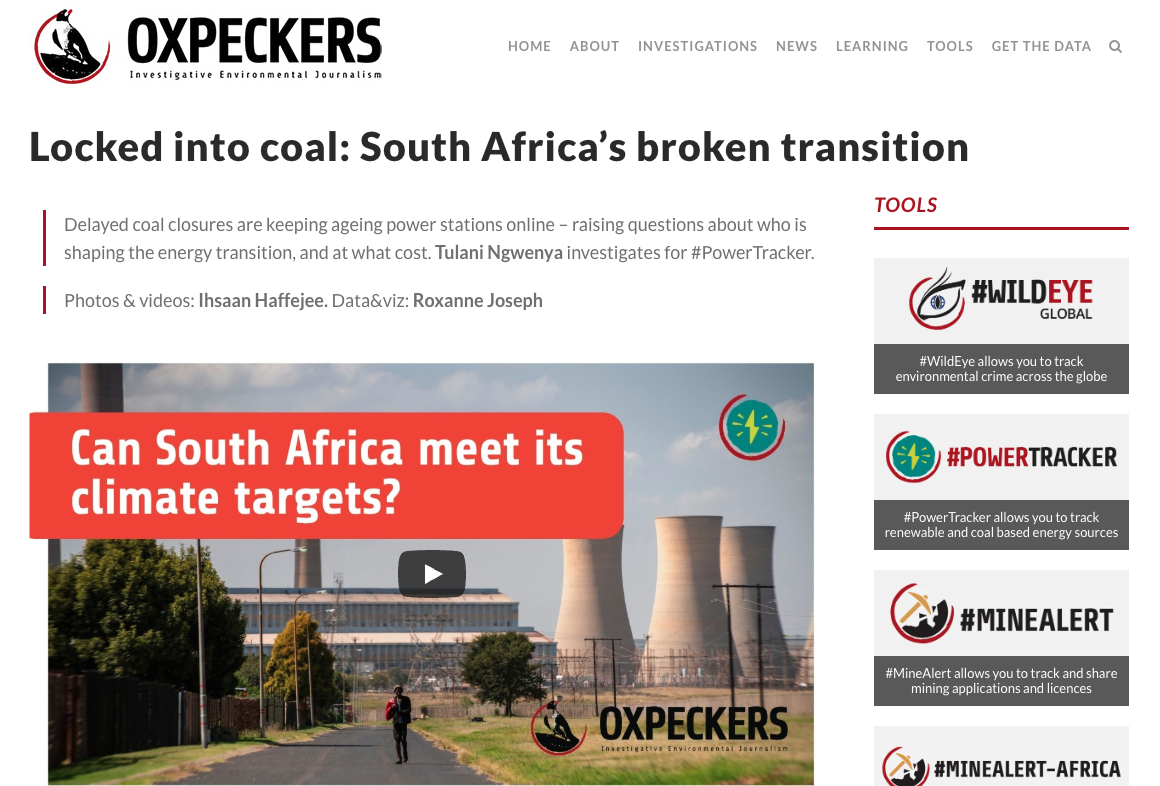
Locked into coal: South Africa’s broken transition
– By Tulani Ngwenya for Oxpeckers Investigative Environmental Journalism
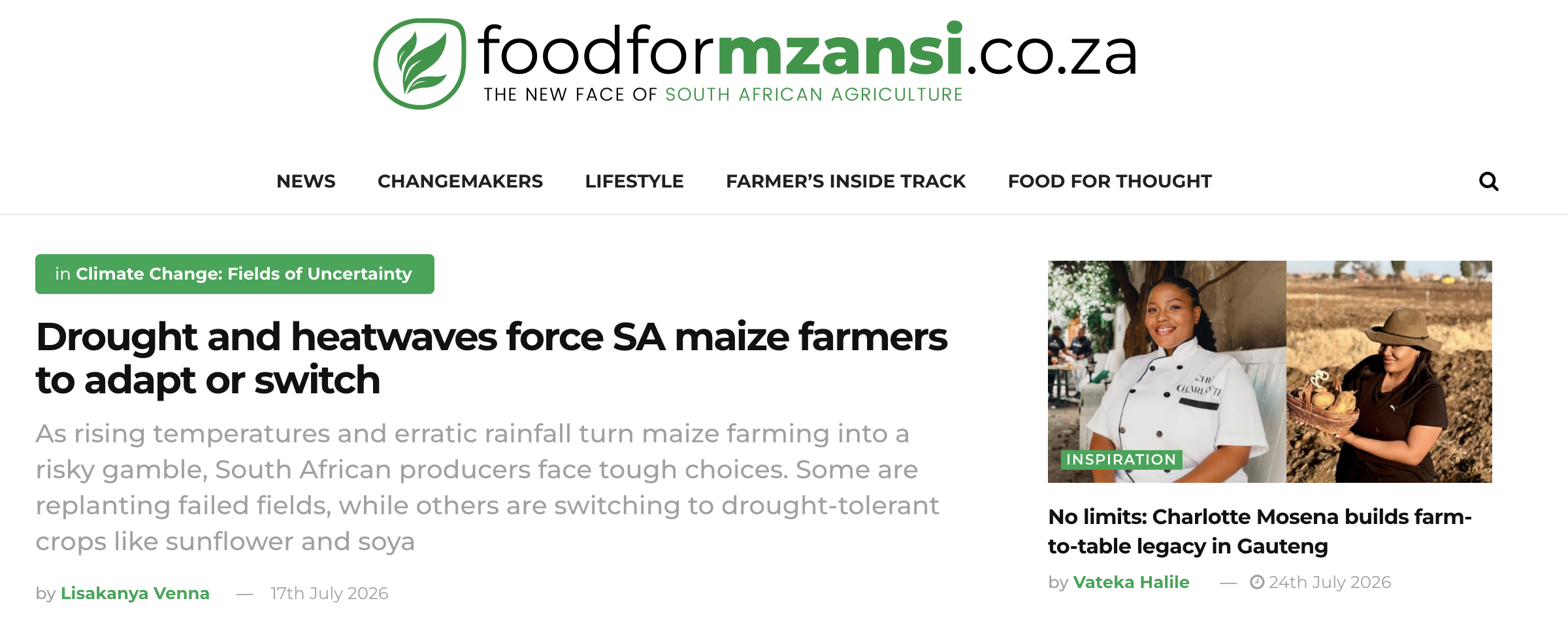
Drought and heatwaves force SA maize farmers to adapt or switch
– By Lisakanya Venna for FoodforMzanzi
Meet our mentors
✳︎
Meet our mentors
✳︎
Meet our mentors
✳︎
Meet our mentors ✳︎ Meet our mentors ✳︎ Meet our mentors ✳︎
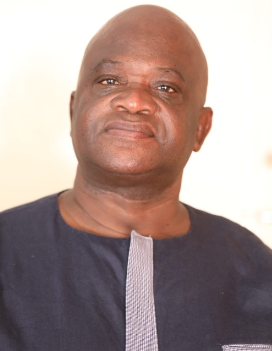
Dr Enoch Sithole
Dr Enock Sithole is the executive director of the Institute for Climate Change Communication (ICCC). He publishes Climate Current, a weekly climate change online newsletter. The ICCC works to raise awareness about climate change through research and training of climate activists, journalists and communication professionals.
Dr Sithole is a former journalism lecturer at the Wits Centre for Journalism, University of the Witwatersrand. He previously worked as a journalist and executive in several institutions, including the New Nation newspaper, the South
African Broadcasting Corporation and the Constitutional Assembly. He holds a PhD in climate change communication. He researches on diverse areas of climate change, including policy, adaptation, journalism and communication as well as community radio.
He has addressed various conferences and written for various news media on climate change-related issues.
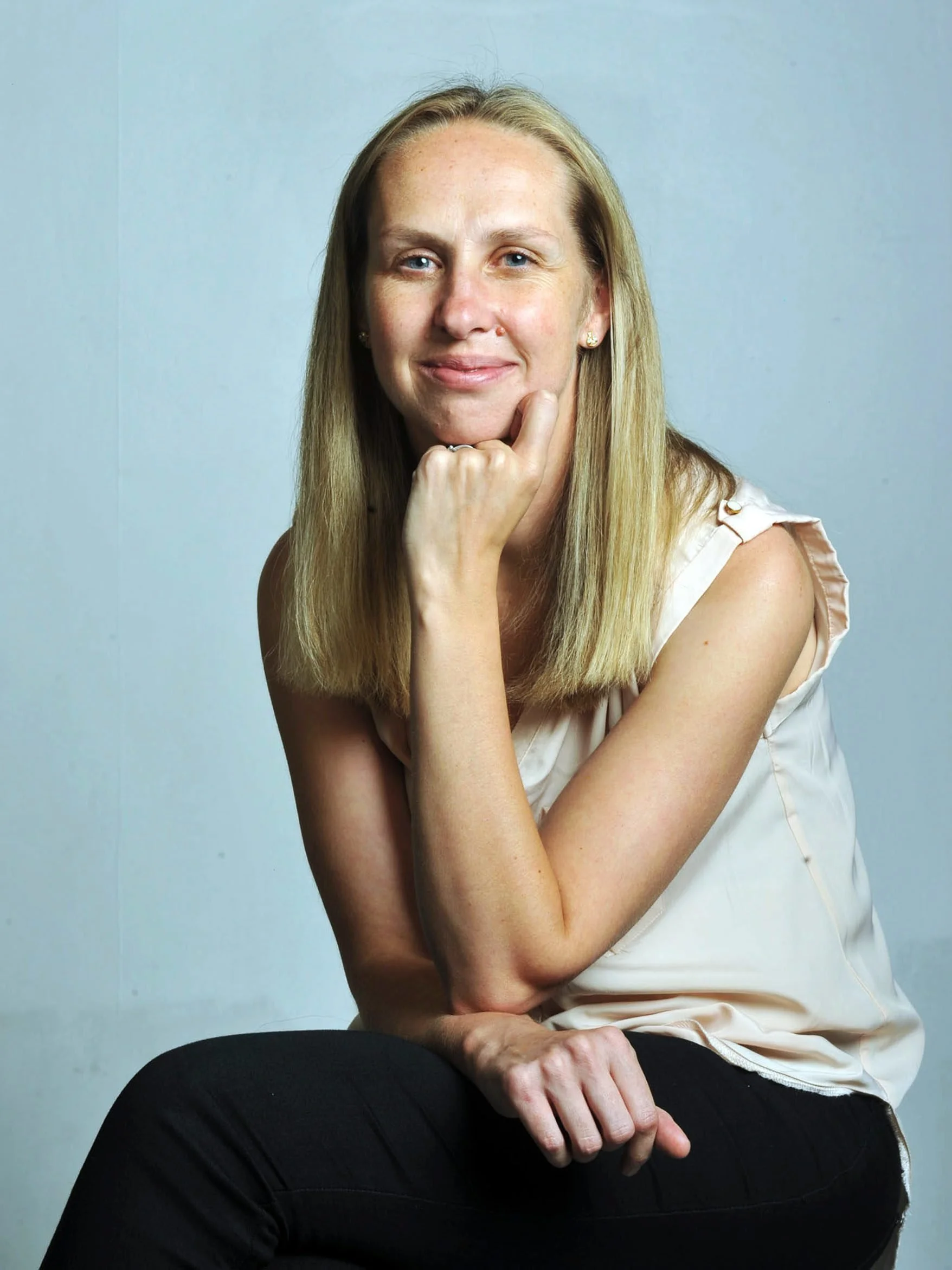
Sheree Bega
Sheree Bega is a seasoned journalist with 26 years of experience. She joined the Mail & Guardian in October 2020 as an environment reporter, where she specialises in covering environmental issues including the climate crisis, water scarcity, pollution, waste management and biodiversity, with a focus on in-depth reporting that highlights South Africa’s environmental challenges.
Before this, she spent 15 years at the Saturday Star as news editor and senior reporter, much of it covering environmental stories, and has also worked at ThisDay, The Star, Business Report and the Mail & Guardian. She has received multiple national and regional awards for environmental journalism, including Vodacom Journalist of the Year honours, SAB Environmental Journalist of the Year awards and SANParks Kudu Awards recognition between 2011 and 2019.
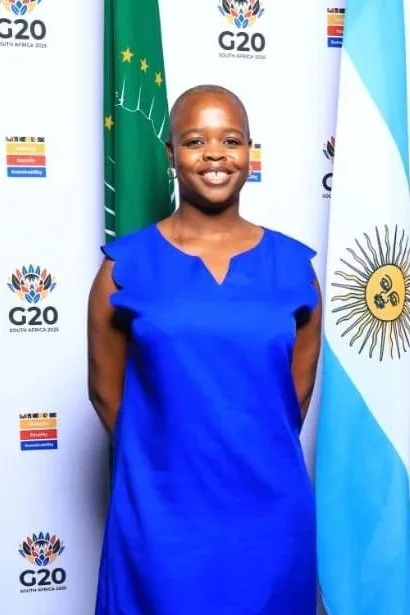
Marcia Moyana
Marcia Moyana is an award-winning freelance journalist from South Africa. She holds a Bachelors Degree in Journalism from the Tshwane University of Technology and is currently enrolled for an MA Degree in Journalism at the Stellenbosch University. Marcia is currently an associate at Oxpeckers Investigative Environmental Journalism unit and also works as a freelancer who specialises in health, science and climate change.
She started working as a freelancer in 2018 and so far she has written for publications like Health-e News, the Mail & Guardian, Alliance for Science, Global Health Now, Dialogue Earth, Wits Curiosity Magazine and Lesotho publication, Newsday.
Marcia is one of about 60 global fellows in the 2025 Reporting on Rare Diseases fellowship under the National Press Foundation, one of 10 grant winners of the 2024 Reporting on Climate Change in Africa grant supported by the Wits Centre for Journalism and Dialogue Earth, one of 40 African health and science journalists who were part of the 2023 inaugural Conference on Public Health in Africa (CPHIA) Journalism fellowship. She was one of four African journalists who were selected by the African Development Bank to report on the COP28 conference for Climate Change in Dubai. She was in the 2022 Early Childhood Development Global Reporting fellowship program from the Dart Center for Journalism. She is also an alumni of the 2021 fellowship from the International Women’s Media Foundation’s Gender Justice Reporting Initiative.