
Let's meet people's basic needs – life food and water – first, then adopt renewables
*
Let's meet people's basic needs – life food and water – first, then adopt renewables *
Water and energy experts agree that clean, renewable solutions are often the fastest way to secure people's basic needs, rather than defer as a different priority. As climate change accelerates cycles of poverty, basic needs like water and food security cannot be achieved without addressing climate change.
Renewables are already delivering water and food security. Replacing diesel irrigation with solar pumps across sub-Saharan Africa and South Asia could lift crop yields by more than 30%, directly benefiting 98 million people with improved food security. Closer to home, when the Drakenstein Municipality invested in fixing leaking pipes, it saved 120 million litres of water in a single year and almost R800 million over 12 years. And eThekwini's Incremental Services Programme has already brought safe water directly into informal settlements, cutting disease and freeing women and children from hours spent walking to distant water points.
And, climate change is already undermining basic needs. The 2015–2017 Cape Town drought, which nearly emptied the city's reservoirs, was made three times more likely by climate change, and Gauteng could now face its own Day Zero water emergency within the next decade or two. South Africa's Free Basic Water policy provides just 25 litres per person a day to indigent households (which is only half the UN-recommended minimum. And under a 2°C warming scenario, South African wheat yields are projected to fall by 18.4%, with almost two million households dependent on subsistence farming already feeling the strain.
Rather than competing with them, renewable and water-smart technologies are already meeting basic needs. eThekwini's Incremental Services Programme brought safe water directly into informal settlements, cutting waterborne disease and freeing women and children from hours spent walking to distant water points. Its NEWGenerator sanitation units now recycle wastewater into fertiliser for vegetable farming, tackling water, food and poverty together. The Working for Water programme has created tens of thousands of jobs for unemployed South Africans, especially women and youth, while restoring rivers and catchments.
Water and food scarcity are being driven by fossil-fuel caused climate breakdown. Southern Africa is warming at twice the global average rate. The World Weather Attribution Consortium found that human-caused climate change made the 2015–2017 Western Cape drought three times more likely. A peer-reviewed study warned that by century's end, a "Day Zero" water crisis could occur two or three times per decade instead of once every 150 years. South Africa faces a 17% water deficit by 2030, while wheat yields could fall 18.4% under 2°C warming and maize yields in the Eastern Cape drop 8% by mid-century.
The poorest households pay the price. For example, during Cape Town's drought, wealthier households installed private boreholes while low-income families cut meals to afford bottled water. To date, more than 20% of South African children are stunted due to malnutrition, and Africa's malnourished population has risen to over 20% of the continent. Additional food and water insecurity driven by climate breakdown will drive these families into further poverty, illness and mortality.
When climate action is designed with the poorest first, it can deliver clean water, affordable food, and reliable power at once. South Africa can't wait for basic needs to be addressed before climate, and there is strong evidence on climate action that it helps secure these.
Still not convinced?
Water insecurity is deepening and it hits the poor first
-
Some argue that we need to meet basic needs first before worrying about climate action. Water security, for example, is one of the basic needs and human rights under threat from unmitigated climate change, however. This climate change is caused by fossil fuel dependance, which makes meeting our basic needs much more difficult.
Southern Africa is warming at roughly twice the global average rate, and the effects on rainfall are already measurable. The World Weather Attribution consortium found that human-caused climate change made the 2015–2017 Western Cape drought, which nearly emptied Cape Town's reservoirs, three times more likely.
A subsequent peer-reviewed study published in the Proceedings of the National Academy of Sciences used higher-resolution modelling and concluded climate change made the same drought five to six more likely, and warned that by the end of this century, a 'Day Zero' event could occur two or three times per decade under a moderate-emissions scenario, compared to once every 150 years historically.
In 2018, Cape Town averted the threat of Day Zero through aggressive rationing and public behaviour change. However, peer-reviewed analysis shows that the burden of the drought and restrictions fell unequally, exposing and worsening existing inequality.
Low-income households were already receiving survival threshold levels of water (about 70 litres per person per day). The primary safety net for the poor is the 6 kl monthly free basic water (FBW) allowance. But it was often inaccessible because many low-income households were unable to register for "indigent" status.
When the City removed the FBW provision in 2017, many poor families were suddenly hit with high tariffs they could not afford. During the drought, these inequalities compounded.
When water restrictions were implemented, higher-income households could reduce their water use by about 58% through cutting “luxury” outdoor uses such as for swimming pools and gardens. Wealthier residents were able to "cushion" the impact: over 60% of higher-income households installed rainwater storage or digging private boreholes.
In contrast, low-income households lacked the funds for such adaptations and were often forced to cut back on food to afford bottled water at inflated prices when municipal supplies were restricted.
The penalties also fell unevenly, because the City’s policy of water allowances being allocated per household - not per person - unequally penalised the poor: low-income households often have more people per household and are multi-generational, therefore quickly exceeding the 6 kl household limit, even when per-person usage was very low. Punitive financial charges fell on these low-income households in a way that they did not on smaller, wealthier households. “The conservation burden was therefore shifted to those with already low water demands,” researchers concluded.
One result of this is that these communities needed to meet strict usage limits often by traveling distances to collect water by hand. This typically fell on women and girls, exemplifying the gendered impacts of climate change.
The city also disproportionately targeted poor neighborhoods for the installation of water management devices (WMDs). In 2018, 64% of these devices were installed in poor communities rather than in high-consumption affluent homes. This was “both an inefficient use of resources and placed further water stress on these low-income residents.”
And, this unequal additional stress affected struggling households in context of broader economic strain caused by the drought (for example, about 30 000 agricultural jobs were lost during Cape Town’s water crisis peaking in 2018).
These crises create a new normal that worsens the cycle of poverty: before the 2015–2018 crisis, Cape Town's wealthy households consumed double the municipal piped water of lower-income families. At the drought’s peak, the city sharply hiked water prices to force a 50% drop in aggregate usage. Wealthy households responded by investing in private boreholes and rainwater systems, so much so that for the two years following the crisis, they used (and paid for) less public water than low-income households.
The City was faced with a huge loss in revenue as a result, unable to use revenues from these wealthy households to subsidise water in low-income areas. All users had to pay a fixed service charge, disproportionately affecting low-income households whose water bill uses a larger portion of income. This was changed in April 2026 when the High Court ruled it invalid and unlawful.
A 2025 study found that recurring droughts in rural Limpopo and the Eastern Cape have depleted key dams to critical levels, exposing the structural vulnerability of communities that depend on surface and groundwater systems with no backup.
-
Scientists warn that Gauteng could face a “Day Zero” water emergency within the next decade or two as climate pressures combine with infrastructure and management failures. In Johannesburg, many areas already go without water for long periods due to this mismanagement.
The University of the Witwatersrand's Professor Francois Engelbrecht, one of South Africa's leading climate scientists, has said a near-term Day Zero in Gauteng is one of the country's most serious climate tipping points that "could collapse South Africa's economic house of cards and be the epicentre of “continental downturn."
South Africa is expected to face a 17% water deficit by 2030,[KW4] with climate change worsening the shortfall as rainfall becomes less reliable. Already, 19% of rural South Africans have no access to a reliable water supply and 33% lack basic sanitation. For these communities, further deterioration could mean the risk of no water at all.
The latter study found that significant investment is needed in upgrading water infrastructure, especially in rural areas, and governance structures should be strengthened for better management and more equitable distribution of water.
-
South Africa's Free Basic Water policy aims to provide just 25 litres of water per person daily to indigent households – extrapolated to 6,000 litres per month. However, this 25 litres is only half the minimum recommended by the UN – and in practice, millions of qualifying households don't receive even that, because of poor municipal implementation.
Water tariffs, meanwhile, have increased by almost six times inflation in recent years.
The World Bank estimates that water scarcity could reduce sub-Saharan African GDP by 6% by 2050. Poor water and sanitation is already the leading cause of diarrhoeal disease in the region, itself the second leading cause of death in children under 5 globally.
South Africa's water inequality is both physical and structural, traceable directly to apartheid-era spatial planning. Climate change does not create this inequality but it amplifies it, turning an existing injustice into a worsening crisis.
When climate shifts allow waterborne pathogens to proliferate, poverty dictates who is most exposed. South Africa’s experience shows that wealthier households may be insulated by private filtration, secure plumbing, or the ability to buy bottled drinking water. Poor communities rely on open water sources or compromised municipal standpipes, making them the primary targets.
-
To stop heatwaves and droughts from becoming even more frequent and severe, countries must dramatically cut greenhouse-gas emissions in line with the Paris Agreement.
It is essential that South Africa [KW6] and all other countries slash their greenhouse-gas emissions to stop climate breakdown at its source. This is the only real way of stopping heatwaves and droughts from becoming even more frequent and severe in the coming years.
South Africa is already a drought‑prone country, and climate change is making heat and rainfall more extreme and less predictable – but there are clear ways to reduce the damage, especially for poor communities.
South Africa’s own National Water Resource Strategy says a sustainable supply depends on water conservation and demand management, along with alternative sources like groundwater, reuse, and rainwater harvesting.
Experts warn that Gauteng’s crisis is driven by collapsing municipal infrastructure. The city’s immediate responsibility should be to fix leaks, ring‑fence money for pipe replacement and reservoirs, and make providers publicly accountable for performance to end “Day Zero” conditions.
National and local government can protect people in a multitude of ways by investing in climate‑resilient water systems: cutting water losses through better water‑use efficiency and reduced ‘non‑revenue water’ (leaks), and diversifying supplies through rainwater harvesting, groundwater, reuse and other alternative sources, as set out in South Africa’s own national water strategies.
They can also back nature‑based solutions like restoring watersheds. rivers, wetlands and catchments, which help store water, slow floods and keep taps running in a hotter, drier climate. These contribute to reducing the dependence of towns and cities on a single dam that may run dry in a hotter climate.
Many of the solutions mentioned in the sections above – upgrading informal settlements, early warning systems, and pro‑poor social protection – improve communities’ resilience to climate-related shocks, before and during.
-
Municipalities have shown that saving water lost to leaks postpones expensive new reservoirs, freeing more water and money for poverty interventions and clean water provision.
For example, when the Drakenstein Municipality in the Western Cape’s hired contractor audited plumbing and repaired leaks, taps and pipes, they saved 120 million liters of water in one year. Over 12 years, water loss dropped from 33% to 11% and saved almost R800 million, whereas before, the municipality was forced to purchase 90% of its water instead of using its own sources. Part of its success was the “the creation of local jobs through the use of labour-based construction methods in conjunction with extensive local stakeholder engagement.”
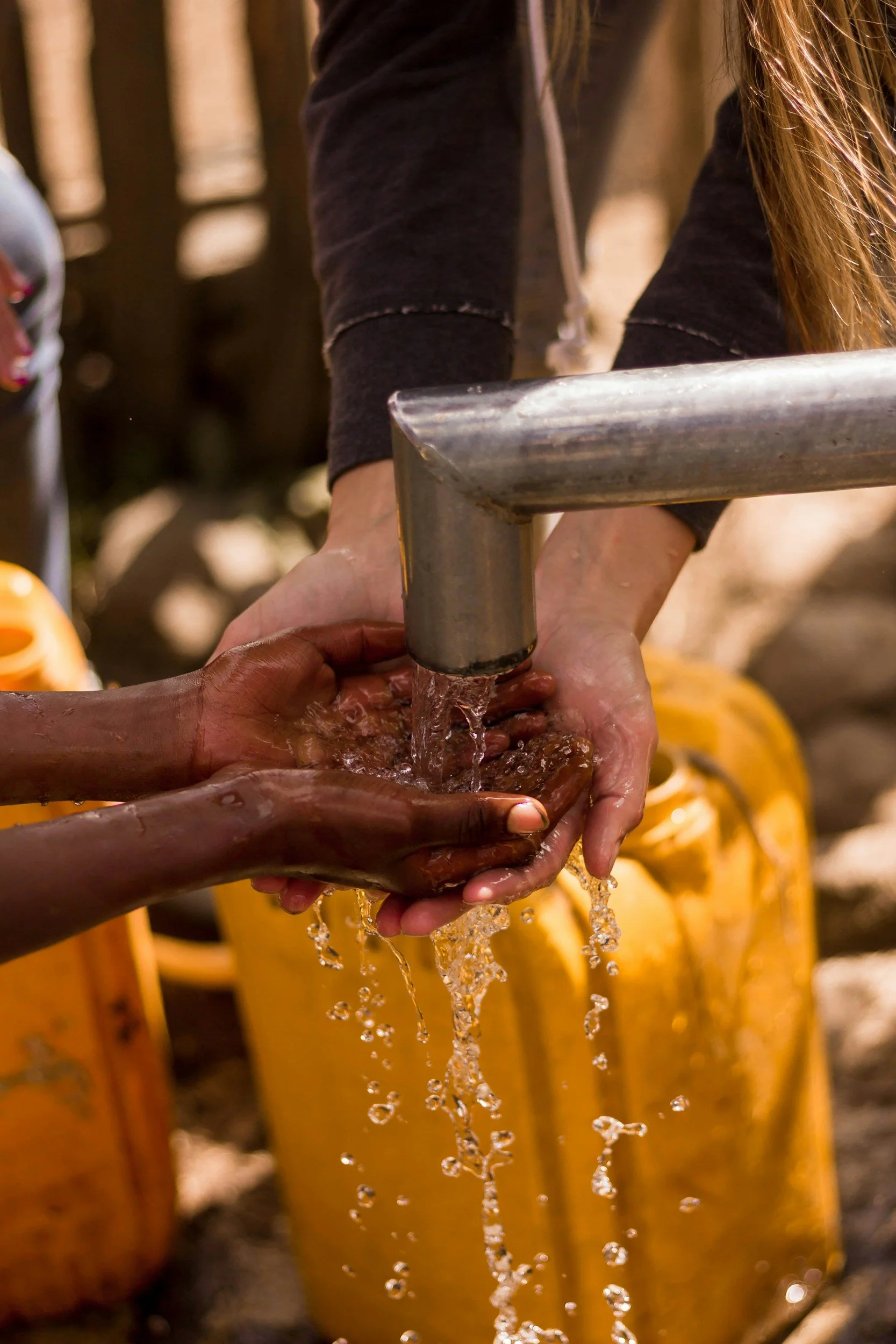
Addressing spatial apartheid’s role in unequal water distribution is also essential. This can look like the eThekwini Municipality’s Incremental Services Program, which prioritised informal settlements through co-designing community solutions. By bringing safe water directly into the settlements, waterborne disease risks plummeted. Women and children were spared hours of unpaid labor spent walking to distant water points, allowing more time for education and micro-enterprise.
Recently, too, “NEWGenerator” sanitation technology has been added to the ablution blocks; it recycles wastewater to extract liquid fertiliser, used by residents for vegetable farming. eThekwini addressed spatialised water inequality, food security and poverty alleviation. These make communities climate-resilient across multiple dimensions.
The South African Working for Water program hired previously unemployed individuals from low-income rural communities, particularly targeting women, youth, and people with disabilities. They bolstered water security by clearing invasive, water-intensive species. Tens of thousands of job opportunities have been created, and helped restore river flow, increase surface water runoff, and rejuvenate mountain catchments.
A massive multi-country initiative evaluated the socio-economic and environmental impacts of replacing diesel irrigation with solar water pumps across 11 sub-Saharan and South Asian countries. It demonstrated that closing the irrigation gap entirely with solar pumps instead of diesel engines would avoid 410 million metric tons of carbon dioxide emissions per year globally. The transition also results in an average crop yield increase of over 30%, directly benefiting 98 million people with improved food security, and saving smallholder farmers over $100 billion USD in diesel fuel costs.
Another study found that replacing traditional manual/fossil-fuel lifting with cost-effective solar pumps can meet more than a third of the crop water needs in Africa, generating over $5 billion USD per year in net profits for smallholders while entirely leapfrogging the fossil-fuel grid infrastructure.
Further north, a South Sudan project involved retrofitting diesel generators for boreholes with solar. When diesel prices spiked, the community could no longer afford water; the shift to solar power permanently stabilised water security and simultaneously zeroed their operational carbon footprint.
Food security and farming are increasingly threatened by climate change
-
The IPCC's 2022 assessment of Africa shows with high confidence that at 1.5°C to 2°C of warming, climate impacts on the continent will include "reduced food production, reduced economic growth, increased inequality and poverty, biodiversity loss, increased human morbidity and mortality."
Wheat, one of South Africa's staple crops, is very vulnerable to heat stress. Each extra 24 hours of exposure to temperatures above 30°C reduces wheat yields by 12.5%, one study found. Under a 2°C warming scenario, average wheat yields are projected to fall 18.4%. Under 3°C, they fall 28.5%.
Maize yield losses in the Eastern Cape could reach up to 8% by mid-century, rising to 13% by late century, under a moderate-emissions scenario (RCG 4.5). This is now more likely than a high-emissions scenario, which would see losses reaching close to 24%.
South Africa’s government-commissioned research finds that white maize yields are expected to decline by 1.1 tonnes per hectare annually, on average, to 2050. This would be a drop in total production of about 1.6 million tonnes yearly, causing a 16% increase in the price of white maize.
-
Almost two million South African households are dependent on subsistence agriculture, StatsSA found, most of them in the Eastern Cape, KwaZulu-Natal, and Limpopo - all provinces that also rank among the country's most food-insecure.
These farmers depend primarily on rainfed agriculture. When rainfall is insufficient or temperatures spike, they have no buffer.
Among 316 smallholder maize farmers across 20 villages, a 2024 survey found that farmers who had not adopted climate-smart practices had roughly half the yield and nearly three times the food insecurity score of those who had.
All of the above means that South Africa's small-scale farmers are among the most exposed to climate risk and among the least supported by the systems meant to help them adapt. Climate change is worsening poverty, and addressing one will always involve addressing the other - we don’t have to prioritise one over the other.
-
South Africa does not farm in isolation. The country is a major maize exporter to Lesotho, Swaziland, Botswana, Zimbabwe, and Mozambique, and climate shocks that reduce domestic harvests ripple outward.
Food shocks affect low-income families the most. The Mail & Guardian noted that "in an environment such as South Africa with higher unemployment, the effects of food inflation shocks tend to be more severely felt by consumers."
For a household spending up to half its income on food (typical of the lowest-income households) a 15–20% food price spike results in cutting meals.
Already, more than 20% of South African children are stunted due to malnutrition.
While the number of undernourished people globally declined slightly between 2022 and 2024, Africa moved in the opposite direction – its number of malnourished people was found to have risen to about 307 million, or more than 20% of the continent's population.
-
Climate change worsens land inequality: hotter, drier conditions reduce yields on marginal rainfed land faster than on irrigated commercial land, widening the gap between those with the best and the least chance of weathering climate shocks.
The legacy of apartheid-era land dispossession means that commercial farming – with better infrastructure, irrigation, and risk management tools – is concentrated among about 40 000 large landholders, while almost two million small-scale and subsistence farmers work marginal rainfed land with little real support.
The provinces with the greatest concentration of small-scale and subsistence farmers – the Eastern Cape, KwaZulu-Natal, and Limpopo – are very vulnerable to climate shocks. They are also the most food-insecure in the country.
These communities with fewer resources often live in the areas that climate change is hitting hardest, such as on floodplains, along river banks, and in areas with weak infrastructure or far from services.
-
The solution to food insecurity caused by climate breakdown is to dramatically slash fossil fuel use, which halts deteriorating weather that is damaging agriculture.
As mentioned in the section on water insecurity above, farmers and households can use water much more efficiently with support – for example through water‑saving methods such as scheduled and/or drip irrigation, drought‑tolerant crops, and community‑managed boreholes – so that when drought hits, they can still grow food and earn an income.
Project Drawdown “highly recommends” measures to reduce greenhouse gas emissions from agriculture: 1. that people eat less red meat, especially in high meat-consuming regions, recommending just 5kg annually for health as well as climate reasons; 2. lowering the food lost and wasted, and 3. reducing the excess nitrogen used to fertilise croplands, to reduce methane emissions.
Initiatives like Feed the Soil and Still Good help South Africans reduce food waste, improving our regional food security and lowering emissions. Individuals and businesses can connect with the existing network of food security organisations to move the needle.
While Fossil Free SA has little agricultural expertise, we do know that support to small-scale farmers on both climate resilience and farming expertise helps to boost food security.