
News headlines about climate typically make us feel discouraged, if not rather desperate.
Just days ago, we learnt that COP31 had flopped, failing to reach key agreements on transitioning away from fossil fuels or on new climate finance; shortly before that, we heard that a “Godzilla” El Niño is starting to hit South Africa, and that the world is heading for a 1.5C overshoot.
It’s easy to succumb to inertia or exhaustion.
But the headlines do not tell the whole story. Around the world – and here in South Africa – climate levers are already working successfully. The transition to cleaner energy is still too slow and is still far from the real Just Energy Transition our country and the world needs, but there’s no doubt the terrain is shifting, in many instances far faster than predictions.
Here are four encouraging trends:
1. Authorities curb fossil-fuel greenwashing
In South Africa, Australia, the EU and elsewhere, greenwashing is being halted. Fossil Free SA’s Fossil Ad Ban (FAB) campaign has had four victories against through complaints laid with South Africa’s Advertising Regulatory Board (ARB), which upheld our two complaints against TotalEnergies and one against gas merchant CNG Holdings. Shell Oil voluntarily withdrew its “sustainable fuels” and another claim in response to our complaint.
Now FAB has laid another complaint, against Standard Bank, claiming that the bank’s environmental claims, including describing itself as “a leading enabler of Africa’s just energy transition”, amount to greenwashing given the bank’s financing of the East African Crude Oil Pipeline (EACOP).
EACOP is a 1 443km heated pipeline designed to transport crude oil from Lake Albert in western Uganda to the port of Tanga in Tanzania for export. FAB’s complaint cites estimates that the pipeline could emit up to 379 million tonnes of carbon-dioxide equivalent over its 25-year lifespan and lock Tanzania and Uganda into decades of oil extraction.
The ARB’s previous rulings in our favour included that TotalEnergies and gas merchant CNG Holdings cannot make claims such as being “sustainable” under their fossil-fuel business models, in what we hope will alert other fossil-fuel companies not to follow suit.
An update on the fossil ad ban movement: More than a dozen municipalities worldwide have banned fossil fuel ads, among them The Hague, Stockholm, Florence, Edinburgh and Sydney. France became the first country to institute a ban in 2022, although implementation has reportedly stalled.
2. Courts prioritise people and planet
“I don’t know what you’re all so gloomy about, because we’re winning,” said a veteran climate activist to her colleagues, including two of us from Fossil Free SA, at a recent round table. (The round table was held under Chatham House rules, so the activist can be quoted but not be named).
She was referring to several legal verdicts in favour of communities and climate NPOs, including the 14 August 2026 Constitutional Court case in which, as Ephraim Ozabor wrote in the Daily Maverick, fishing communities supported by Natural Justice and others “did what three decades of UN climate summits have struggled to do. They held an oil company (Shell) accountable.” The court ruled against Shell and its partners’ exploration rights.
In another case, in August 2025 the Western Cape High Court set aside environmental authorisation for TotalEnergies’ and Shell’s exploration for oil and gas off South Africa’s south-west coast between Cape Town and Cape Agulhas — an area of roughly 10,000 km². The State and Shell have appealed.
And in the “Cancel Coal” case of December 2024, the High Court found that government plans for 1,500 MW of new coal-fired power were unconstitutional, unlawful and invalid. The case, brought by the African Climate Alliance and others, made clear that climate policy cannot ignore the health, rights and futures of children and frontline communities. The Supreme Court of Appeal dismissed the government’s appeal with costs on 30 October 2026.
3. Renewables surge
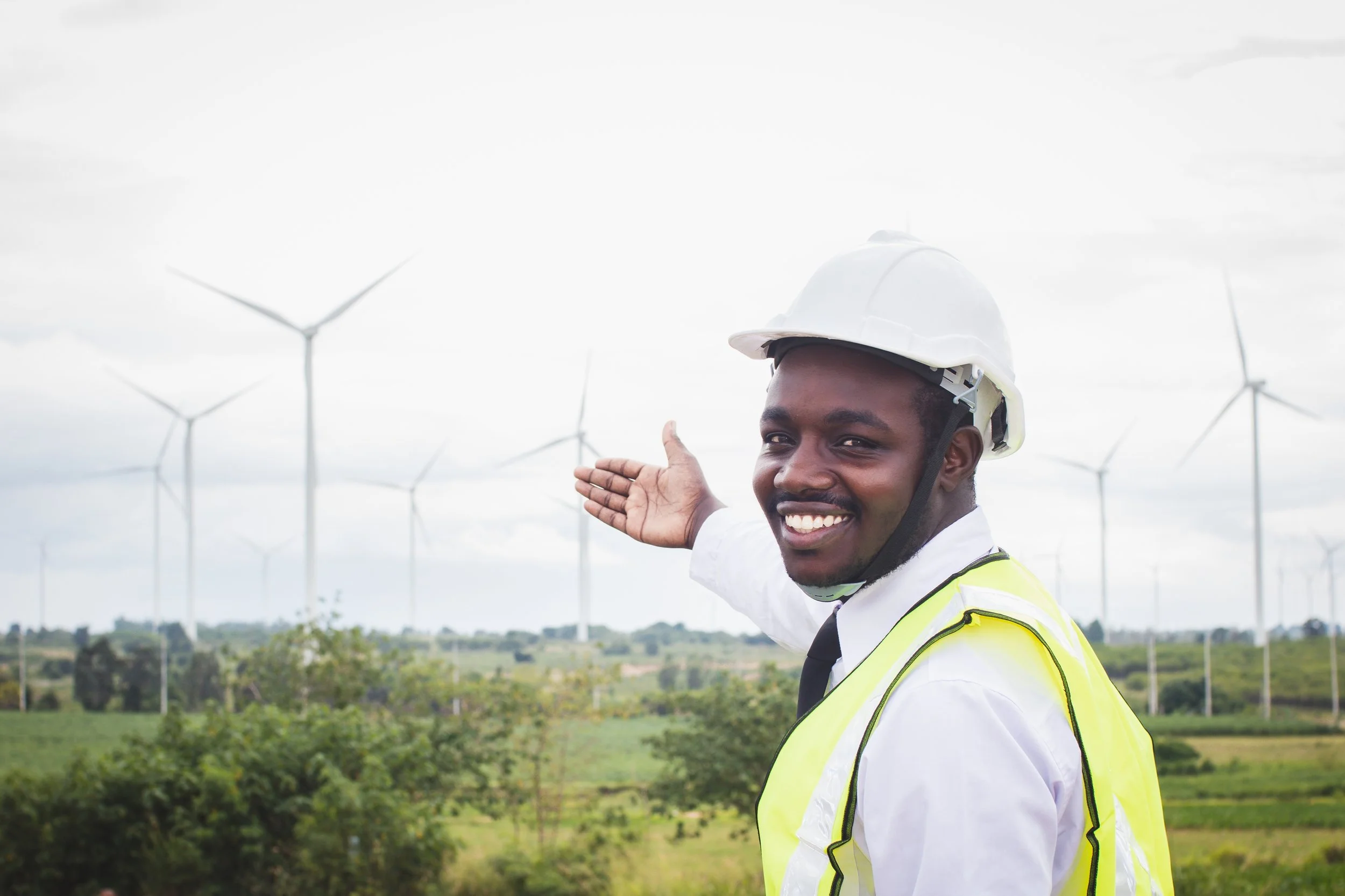
Despite the disappointing outcomes of COP31, there is broad agreement that the world’s transition to renewable energy is unstoppable.
Renewable energy supplied all of the world’s new electricity demand in 2025, meeting all new demand and ending the overall rise in fossil-fuel electricity, although gas still grew, the thinktank Ember reported earlier this year.
It was the first year since 2020 without an increase in fossil fuel-generated electricity, and only the fifth year without a rise this century. In China and India, historically the largest contributors to fossil-power growth, fossil generation actually fell in 2025.
Solar power’s rise was 18 times larger than that of gas, the only fossil fuel that increased in 2025.
South Africa still has a long way to go. Renewables supplied 13% of our electricity generation in 2025, below the global average, and we still gain 83% of our electricity from fossil fuels.
Africa is on track to install a record 17GW of renewable electricity will be installed this year, a figure invisible to statistics as reporting is poor and it is “distributed solar” generated by individuals, businesses, and communities.
This amounts to about 100 000 solar panels installed every day. Notable increases are estimated for the Democratic Republic of the Congo (544% renewables growth), Zimbabwe (282%), Egypt (176%) and Zambia (117%).
As was acknowledged even in the sombre media stories about COP31’s disappointing outcomes, “the transition to renewable energy is inevitable.”
4. Electric vehicles boom
One in four new cars sold worldwide was electric last year, a growth of 20% from the year before, the International Energy Agency found. EVs and hybrids reached 35% of global new car sales, and petrol-only car sales fell below half for the first time.
2025 was the fifth consecutive year in which annual electric car sales increased by about 3.5 million.
In South Africa, the EV market is small but growing. New energy vehicles, mostly hybrids, reached 6% of new light-vehicle sales in June this year. – more than double the share a year earlier.
We note with concern that most of the cobalt necessary for EVs’ lithium-ion batteries, along with those in smartphones and computers, is mined in the Katanga region of the Democratic Republic of Congo, where thousands of people, including children, work under dangerous conditions that result in frequent injuries and long-term health problems.
And it’s worth remembering that while EVs are essential, it’s even more important that cities have good public transport and urban spatial planning that allows people to live and work more conveniently and sustainably.
It will take much more than EV car sales to create an accessible and low-carbon transport system. Nonetheless, every shift away from petrol and diesel helps.
