
But we need fossil fuels for socio-economic stability
*
But we need fossil fuels for socio-economic stability *
Fossil fuels have not brought socio-economic stability to South Africa. Instead, coal has created opportunities for corruption and enabled wealth to be concentrated in the hands of a few.
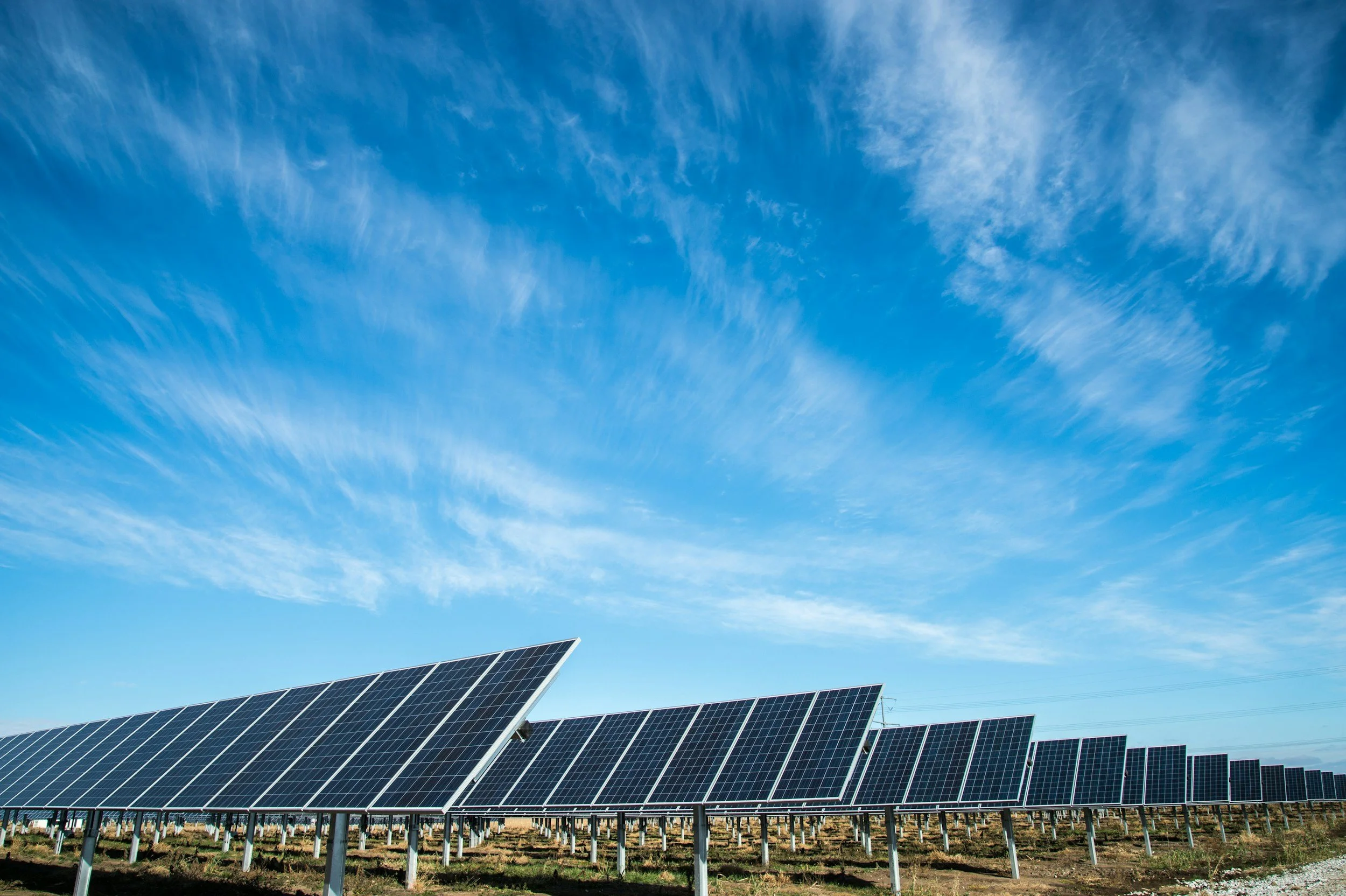
Renewable energy can help to change this as clean, decentralised energy is harder to steal and easier to trust than coal, oil and gas.
South Africa's coal dependence is maintained by what researchers call the Mineral-Energy Complex: a network of mining, political and Eskom interests whose fortunes are tied to coal.
The Zondo Commission found that R14.7 billion in Eskom contracts were affected by state capture, while research by the Gordon Institute of Business Science found that corruption and collusion contributed to R300 billion in cost overruns at the Medupi and Kusile power stations.
Load shedding caused by the failing electricity system cost the economy almost R225 billion between 2020 and 2023.
South Africa’s renewable energy procurement programme between 2011 and 2015 was widely regarded as highly successful before it was stalled by Eskom’s refusal to sign power purchase agreements with independent producers. Research has found that renewable energy grows faster in South Africa at times of greater trust in government, when institutions are more transparent and accountable.
Decentralised renewable energy can have a host of benefits, studies show: it can prevent more climate damage, reduce the concentration of money and political power that makes large fossil-fuel projects vulnerable to corruption, and encourage peace, rather than conflict or war.
Clean energy is not automatically corruption-proof – good governance, transparency, and accountability are still essential. But moving from large, centralised fossil-fuel systems towards more local and decentralised renewable energy can make energy systems harder to capture and give more people a stake in how their energy is produced.
There is growing evidence that renewable energy is linked to cleaner and more transparent governance.
Still not convinced?
-
South Africa’s coal dependence is not just a matter of geography or history. It is actively maintained by what political economists call the Mineral-Energy Complex (MEC) – a powerful network of mining companies, energy-intensive industries, Eskom, financial interests and political actors whose fortunes are tied to coal. First identified in academic research in 1996, the MEC helps explain why coal has remained central long after its social, economic and environmental costs became clear.
Research published in the journal Energy Policy found that "power struggles and corruption disrupt just transition mechanisms" in South Africa, with the MEC resisting the policy shifts that would reduce coal dependence and broaden economic participation.
A separate study based on 30 interviews with current and former Eskom managers, government energy officials and transparency experts, found that corruption and rent-seeking within Eskom helped entrench coal procurement systems because they were opaque, discretionary and highly profitable.
Former Eskom CEO André de Ruyter captured the contrast starkly when he resigned: “The one good thing about the sun and the wind is that it cannot be stolen. It also cannot be exported to China and sold back to us.”
-
The institutional damage caused by corruption in South Africa’s coal economy was laid bare by the Zondo Commission – the most extensive investigation into public sector corruption in democratic South Africa. The Commission found that R14.7 billion in Eskom contracts were “afflicted by state capture,” with coal supply deals identified as one of the clearest sites of abuse. According to the report, the Gupta family, aided by politically connected ministers and Eskom board members, secured access to Eskom’s multibillion-rand coal procurement system by sidelining experienced executives and replacing them with political loyalists.
A GIBS Business School analysis of coal power corruption at Eskom calculated that the Medupi and Kusile coal power stations – intended to solve South Africa's power crisis – accumulated R300 billion in cost overruns between 2007 and 2019 due to "grand corruption and collusive practices". Medupi, first promised in 2007, took 17 years to reach full operation. Kusile has had major long-running design and systems problems.
Chancellor House, an investment company linked to the ANC, was part of a partnership that was awarded a construction tender for both the Medupi and Kusile power stations. The ANC stood to make $1 million from the deal.
For every year of delay in bringing these plants online, South Africans paid for expensive emergency diesel generation, endured load shedding, and lost economic activity. Frequent load shedding is estimated to have cost the South African economy R225 billion between the start of 2020 and of 2023 alone.
-
Globally, the “resource curse” is a well established pattern: abundant natural resources in a country result in slower growth, weaker governance, more corruption, and greater instability. The OECD's analysis of fossil fuel subsidies in Sub-Saharan Africa found that the resource curse is a documented pattern in the region. Countries and regions rich in extractive resources tend to see those resources captured by narrow elites, while public investment in education, health, and infrastructure is crowded out or actively looted.
Similarly, the report Pipe Dreams by Power Shift Africa and the ACCORD research centre's analysis notes that across Africa, fossil fuel extraction has been "closely associated with the resource curse, where countries rich in natural resources experience stagnated growth, corruption, and conflict rather than widespread development." Local communities near extraction sites – like those in Mpumalanga's and Limpopo's coalfields – bear the health and environmental costs, while the profits flow elsewhere.
-
Corruption doesn’t just distort coal contracts – it slows down the shift to renewable energy too. A peer-reviewed econometric study published in The Conversation and covered by Corruption Watch found that renewable energy grows faster where institutions are cleaner and more transparent. Where governance is weaker and fossil fuel interests are entrenched, the transition stalls. The study points to close ties between governments and the fossil fuel sector.
This finding tallies with recent history. South Africa’s utility-scale renewable energy programme run from 2011 to 2015 – hailed as one of the most successful procurement processes in the world – was deliberately halted when Eskom refused to sign power purchase agreements with independent renewable producers, despite the electricity minister instructing it to do so. This delayed several gigawatts of affordable clean power – gigawatts that would have reduced loadshedding, lowered electricity prices, and reduced coal pollution.
A 2023 study outlines the "geopolitical double dividend" of moving away from fossil fuels. It explains how localized, decentralized green energy architectures avoid the "fatal concentration of resource rents and political power" that historically undermines democracy and drives civil conflicts.
A policy brief by the Clingendael Institute examines how Decentralized Renewable Energy (DRE) systems (like solar microgrids) actively weaken corruption. Large fossil fuel projects require massive capital and complex procurement; this is prime breeding grounds for state capture. Conversely, localised, community-led DRE systems bypass central government funding and patronage networks. An added benefit is that this disincentivises illegal fossil-fuel war economies.
Studies also find that energy transitions to renewables are an opportunity to transform governance, like in Bangladesh, where massive deployment of solar home systems was achieved through bottom-up financing models that sidestepped centralized bureaucratic grid corruption.
-
The evidence consistently shows that renewable energy is the cheaper, healthier option, while continued dependence on coal, oil and gas is a costly mistake that entrenches poverty.
Myth 3 of Climate Hope explains that new sun and wind projects provide electricity that is more than three times cheaper than the electricity Eskom provides. Also, renewable energy does not carry the massive social and environmental costs outlined above.
This cheaper electricity has massive economic benefits, creating far more jobs.
Cleaning up the air by phasing out fossil fuels is one of the fastest ways to save lives and protect families’ incomes. Cutting coal, oil and gas use – and especially the dirty air from power stations, traffic and household smoke – prevents strokes, heart disease and lung disease that currently kill about seven million people globally every year, including many working‑age adults who support whole families.
The same steps that cut climate pollution – switching to clean energy, cleaner public transport and clean cooking – are also public‑health measures that keep breadwinners alive and able to work.
Avoided deaths: When Komati’s coal power units were taken offline and replaced with solar and wind, a health impact assessment found good news: over three years, the closure of this single coal plant avoided an estimated 220 premature deaths and saved the local community R4.9 billion in direct health-related economic costs.
Even before full retirement, simply lowering current fossil-fuel intensity and substituting parts of the grid load with clean energy has huge health impacts: if Eskom goes through with its coal plant retirement plan properly, the Centre for Environmental Rights estimates that it would “would avoid a projected 2 300 deaths per year from air pollution and economic costs of R42 billion per year”, and avoid “140 000 asthma emergency room visits, 5 900 new cases of asthma in children, 57 000 preterm births, 35.0 million days of work absence, and 50 000 years lived with disability.”
This not only reduces climate-change causing emissions - it also reduces the financial burden on our public health system, freeing up more funds for other poverty interventions, and keeps breadwinners healthy, active, and earning a living for their families.
Studies, policy briefs and community programmes show the multiple benefits of localised and community-led green energy systems. These help avoid the corruption that comes with large fossil fuel projects, help to preserve peace, and foster both socio-economy development and environmental resilience.