
❋
conscious capital short course
A free, hybrid short course on socially conscious personal finance, Conscious Capital is exploring how to manage our money and become more financially secure in ways that also support the prosperity of others. It’s the latest project in our expanded climate finance campaign, now called Future We Want because redirecting financial flows is essential for creating this future. The outcome of this course is to empower every day citizens to navigate their way towards deep, shared, sustainable prosperity, as individuals and as a wider society.
This work integrates more broadly with our Campus Climate Leadership campaign and is currently running successfully at UCT with potential for expansion to other universities. Conscious Capital integrates deep knowledge of the globally sustainability crisis with the basics of personal finance, not without having to navigate contradictions.
To our knowledge, this course is unique not just to South Africa, but possibly globally.
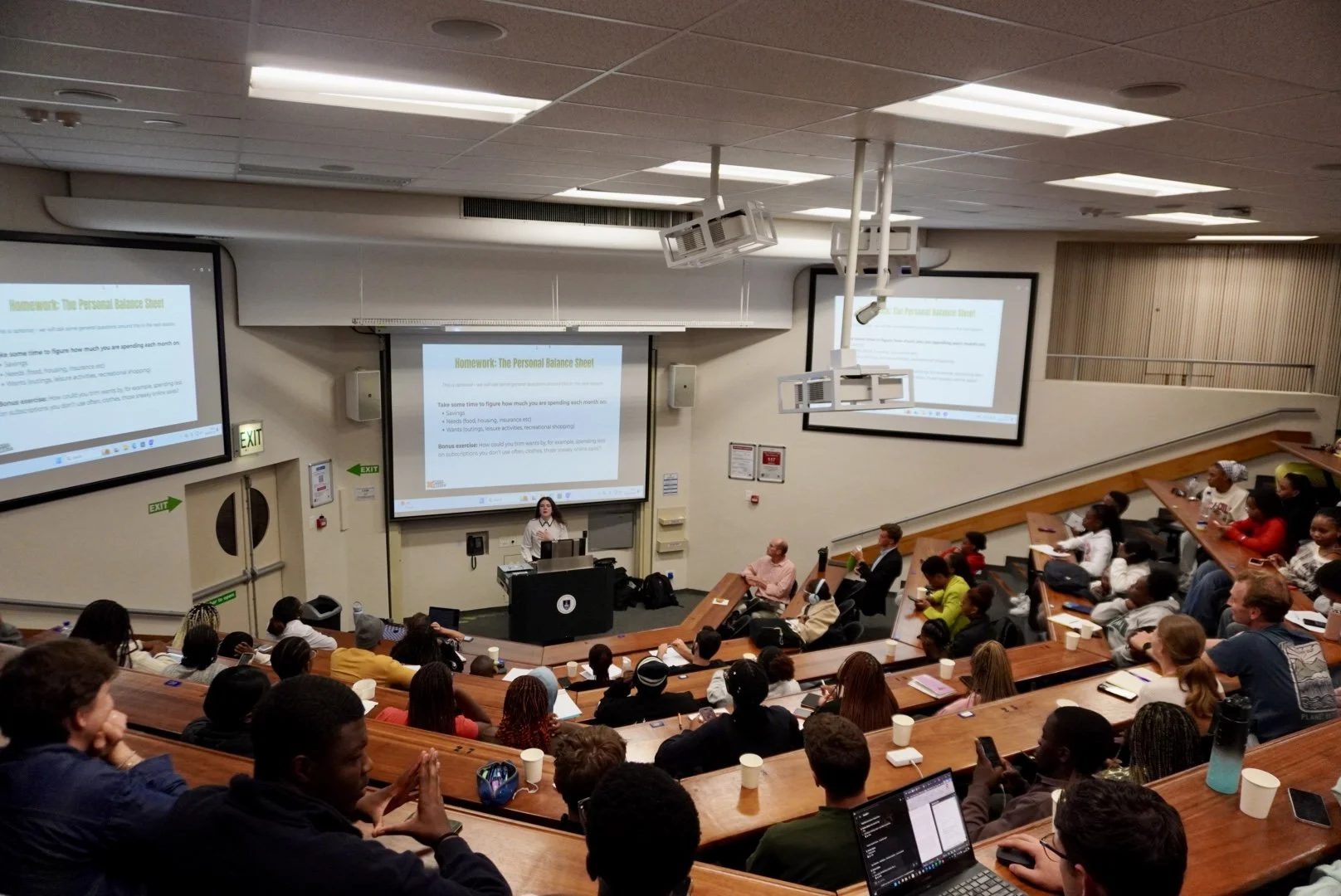
Welcome to the official launch event and session one of our Conscious Capital Course! 💰 This hybrid event was hosted at UCT, in collaborations with UCT's Investment Society. This session grounds participants in the context as to why we need to use our personal finance towards building a more sustainable and equitable future, without relying on the fossil fuel industry. We also discuss balancing financial goals and some key financial terms to prepare for the rest of the course.
We cover more on why the South African economic board is so tilted, looking at the structural leaks and debt traps that drain our wealth while profit-driven myths ignore our actual well-being. Then, we’ll reframe wealth through the Five Capitals and explore how to use our collective power as investors and pension-holders to move trillions away from fossil fuels and toward a generative, just future.
This session covers how to build and manage long-term wealth by understanding the mechanics of compound interest and diversification, navigating investment costs and fund types, aligning choices with personal values, and applying practical asset allocation to your monthly savings.