
South africa must fix poverty before worrying about climate change
*
South africa must fix poverty before worrying about climate change *
Cutting emissions while helping vulnerable communities adapt to climate change is the best way to fight poverty.
Compared with a 2°C world, limiting warming to 1.5°C could reduce the number of people exposed to climate risks AND vulnerable to poverty by an estimated 62 - 457 million worldwide. It would also reduce risks to food security, water security, health and livelihoods.
Poorest communities are hardest hit by climate collapse. More than 5 million people live in informal settlements in South Africa, many in high-risk flood zones or on steep hillsides. They are most vulnerable to climate change impacts – including extreme heat, which can be life-threatening for shackdwellers – and have the least resources to avoid them or recover afterwards.
While 62% economic losses from natural catastrophes were insured globally in 2025, in Africa only 0.5% of these losses were insured. When climate disaster strikes, vulnerable families lose homes, possessions, income and access to work, schools and healthcare. This drives the poverty cycle faster and further.
A World Bank study found that climate change could push 32 to 132 million additional people into extreme poverty by 2030, with more than half of them in Sub-Saharan Africa and South Asia. In South Africa, a 2023 peer-reviewed study warns that without strong climate action, global warming could reduce GDP by up to 43% by 2100.
Unmitigated climate change would undo all poverty reduction progress to date. African countries are already losing 2–5% of their GDP annually to climate impacts – money that could be spent on poverty interventions. Between 1980 and 2021, 86 weather-related disasters cost South Africa R113 billion and affected more than 22 million people. For example, the April 2022 KwaZulu-Natal floods were made twice as likely by climate change and killed 544 people, hitting the poorer regions hardest.
But there is a solution: the best climate solutions simultaneously reduce poverty and create jobs. South Africa's eThekwini municipality created 800 green jobs through its Transformative Riverine Management Programme, while reducing climate disaster damage. The initiative won a global Development Project Award. Research from the Poverty Action Lab (the gold standard on evidence-based policy) shows that giving families cash aid before rather than after extreme weather events helps them recover faster and reduces long-term poverty.
Importantly, not every climate intervention automatically reduces poverty: only when climate policies are designed with vulnerable communities, can they deliver safer homes, healthier neighbourhoods, local livelihoods and greater resilience.
Scientists like those behind the IPCC call measures that tackle poverty and climate together "climate-resilient development pathways”. These pathways use solutions including upgrading informal settlements with better drainage and evacuation routes; building climate-ready infrastructure, and establishing early warning systems. A just energy transition is not about choosing to prioritise climate over poverty. Our energy system is key: as the IPCC warns, all fossil fuels (coal, oil and gas) must be phased out urgently to avoid dangerous warming.
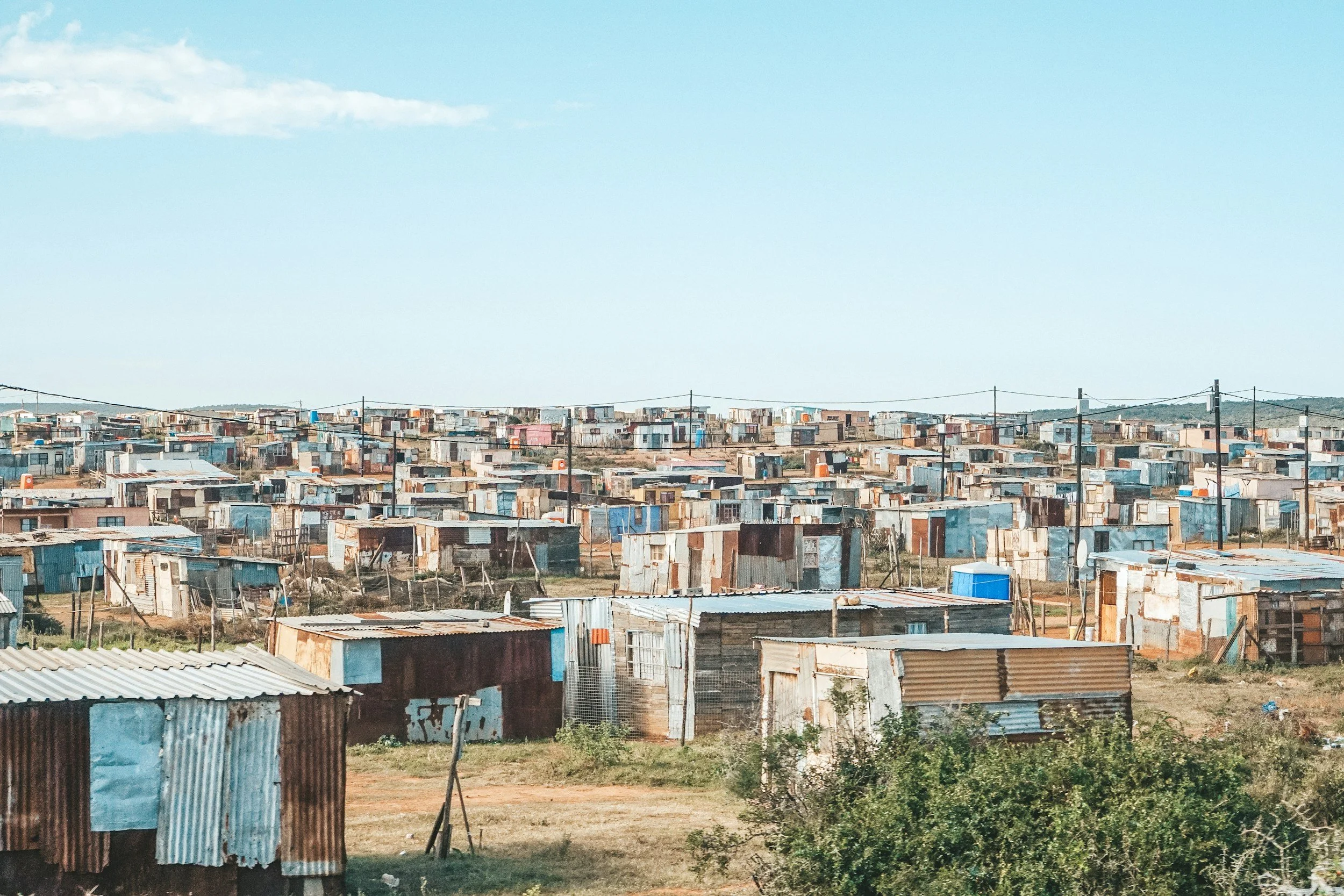
South Africa cannot choose between addressing poverty or climate action; both must be done, and the good news (as evidenced below) is that when done right, climate action is poverty action.
Still not convinced?
-
Climate change and fossil fuel dependence have the greatest impacts on low-income communities – those without the means to adapt in ways like moving home to a safer place or insuring their homes and businesses, or even simply cooling down their homes.
Climate change increases both the frequency and severity of extreme weather events such as floods, heatwaves, droughts, and wildfires.
In South Africa, heavier rainfall is contributing to destructive floods, while hotter and drier conditions increase the risk of runaway fires.
These disasters damage homes, businesses and infrastructure. They disrupt transport, healthcare and schooling, and often hit low-income communities hardest, as they have fewer resources to recover or relocate.
South Africa is the world's most unequal country, and that inequality determines who suffers most when extreme weather sets in.
Between 1980 and 2021, South Africa recorded 86 notable weather-related disasters, affecting more than 22 million people and causing about R113 billion in economic losses.
Informal housing is highly exposed to disasters including floods, storms, droughts, landslides and fires. More than 5 million people live in informal settlements across South Africa. Many of these settlements are in high-risk areas such as floodplains or wetlands, or in proximity to pollutants.
Across Africa, only 9% of direct climate disaster related losses over the past four decades were insured, leaving governments, communities and families without the means to rebuild. On average, less than 0.5% of these losses are insured in Africa.
This means that when a shack, spaza shop or other resources are destroyed, the owners typically lose everything.
-
Cutting emissions as quickly as possible to limit warming to 1.5 °C is essential to prevent pushing already poor communities into deeper poverty: emissions cause more warming, which causes more intense, frequent extremes – and these destroy homes, livelihoods, and economies. And in fact, many climate solutions reduce poverty.
Keeping to the 1.5°C increase would reduce the number of people vulnerable to poverty by a staggering 62 to 457 million. It would also lessen the exposure of poor people across the world to sickness, and insufficient food and clean water.
Limiting warming as much as possible as quickly as possible would also make it easier to achieve Sustainable Development Goals related to poverty, hunger, health, water and sanitation. This is because climate change is a threat multiplier – it compounds and worsens all existing drivers of poverty.
As IPCC authors and experts point out, housing and infrastructure should be built with climate risks in mind to reduce disaster losses, and make development more resilient. This includes not building in high risk zones like floodplains or slopes, improving housing structures to withstand wind, heat and rain, and upgrading infrastructure like drainage and sewage management.
A UN-Habitat report highlights that billions of people globally live in informal settlements. Climate risks and vulnerabilities should be identified, and these settlements should be upgraded in a way that helps the most vulnerable first. The UN-Habitat framework shows how climate finance can be used to upgrade drainage and housing while involving local community members in the physical design. This participatory upgrading of informal settlements is an opportunity to address climate risk and poverty.
For example, community‑led climate adaptation in informal settlements – where residents map risks, plan local drainage, evacuation routes and small‑scale protective infrastructure – has been documented as an effective way to increase resilience and make cities more inclusive and sustainable.
See the solutions in other sections of this myth for more information on combatting climate change, creating more jobs and boosting socio-economic development.
-
Fossil fuel-driven climate change is now worsening the impact of extreme weather events across the world, resulting in countless deaths, inevitably including children and breadwinners. The knock-on effects keep the cycle of poverty spiralling.
The latest Lancet Countdown report warns that the health impacts of climate change are worsening, with “millions dying needlessly each year due to fossil-fuel dependence, growing greenhouse gas emissions, and failure to adequately adapt.”
Heat-related deaths have risen to 546,000 a year, up over 125% from the 1990s, and wildfire-smoke pollution caused a record 154,000 deaths in 2024.
Fossil-fuel-caused outdoor air pollution also caused 2.52 million deaths in 2022, and dirty household fuels caused another 2.3 million deaths. Lancet’s models show these are avoidable deaths resulting from toxic pollutants and ambient fine particulate matter from fossil fuels.
The International Federation of Red Cross confirmed that during the April 2022 KwaZulu-Natal floods – the deadliest flood disaster in South Africa's recorded history – the worst-hit areas were "the poorer regions": informal settlements built close to rivers, below flood lines, and on steep hillsides.
More than 12,000 homes were destroyed, more than 40,000 people were displaced, and 544 people lost their lives.
Those floods were worsened by climate change. Using peer-reviewed climate modelling, an international team of scientists from the World Weather Attribution (WWA) consortium found that human-induced climate change made the floods twice as likely to occur. A follow-up study found that climate change made the rainfall 40% and 107% heavier.
In 2023, catastrophic flooding destroyed large parts of the Libyan city of
Derna, killing tens of thousands of people. Research shows climate change
made that disaster about 50 times more likely and 50% more intense.
Climate breakdown combined with inadequate infrastructure caused these deaths.
In June 2025, a powerful winter storm swept through the Eastern Cape, one of South Africa’s poorest provinces. Floodwaters rose by up to four metres, sweeping away homes, vehicles, and people in the predawn hours when communities were asleep, killing 103 people, 40 children among them. More than 4,700 people were left homeless. At least 127 schools and 20 healthcare facilities were damaged. The estimated cost of reconstruction was more than R5 billion.
While no attribution study has determined the role climate change played in these floods, they occurred in an area where scientists warn that extreme rainfall and flood risk are intensifying with global warming. President Ramaphosa visited the disaster zone and stated: "This disaster is part of climate change."
-
Shacks are far hotter than brick-and-mortar dwellings, and humidity makes conditions even worse. In a Daily Maverick story, journalist Leonie Joubert exposes conditions in the muggy informal settlement of Dakota, Durban, as “potentially life-threatening”. As in the infographic in the article, heat and humidity combined to make Thokozile Cebekhulu experience an unbearable “felt temperature” of 53C in her shack on the hottest day of 2025, and Jomo Sakhile experienced 56C in his home nearby. The felt temperature measured at the nearby Ballito weather station was substantially lower, although well into the danger zone, at 48.6C.
“Extreme heat is a silent killer,” Joubert writes. “Deaths hide behind mortality data that show heart or kidney failure, respiratory distress, or even deaths of despair.” A study by the Academy of Science of South Africa shows that heat has emerged as a “defining climate-related health challenge for the SACD region”.
This story is one of many from Story Ark — tales from southern Africa’s climate tipping pointsThe 2025 Lancet Countdown on Health and Climate Change (produced in collaboration with WHO and 70+ institutions) found that heat-related deaths have already reached an average of 546,000 per year between 2012 and 2021 — a 23% increase since the 1990s, even after accounting for population growth. The Guardian reported this as "rising heat kills one person a minute worldwide". The Lancet Countdown is the primary annual monitoring report that tracks IPCC-aligned indicators on climate and health.
Without rapid emissions cuts, a world that is 2 to 3 degrees warmer will increase the number of people exposed to lethal heatwaves 16 times.
-
As the World Bank put it: "For the world's poorest people, climate change does not announce itself in parts per million. It arrives as a ruined harvest, a flooded shopfront, and lost learning as children are kept out of school."
A peer-reviewed study published in the journal “Urban Forum” found that flooding in the Melusi informal settlement in Tshwane doubled residents’ journey times, blocked their access to employment and education, and cascaded them into deepened socioeconomic inequality.
Given their inadequate sewage systems, it also brought additional health risks. This is another example of how impoverished communities like those in informal settlements experience the compounding effects of climate change: more intense, frequent floods coupled with underserviced, inadequate sewage infrastructure triggers massive spikes in diseases like E. coli, Salmonella, and multidrug-resistant bacteria.
A study by environmental scientist Sithabile Hlahla, who interviewed 378 households in four low-income communities in Pietermaritzburg, found that fewer than half had any coping strategies for climate disasters due to inadequate resources.
Other key ways that climate change drives poverty are rising food prices and the health costs of climate-related illness – challenges that are already being experienced. Find out more in the sections on food and water that follow.
A World Bank peer-reviewed study found that climate change could push between 32 million and 132 million additional people into extreme poverty by 2030. More than half of those people live in Sub-Saharan Africa and South Asia.
A 2023 study on South Africa found that without strong mitigation efforts, global warming could reduce South Africa’s GDP by up to 43% by 2100 – with a potential “welfare loss” of about 50% when the direct impacts on inequality are factored in.
Read more about the economic effects of climate change in Myth 3.
-
The idea that we must choose between poverty and climate is not just wrong – it is dangerous.
South Africa is highly vulnerable to climate disasters. In the 16 years between 2008 and 2022, 53 disaster events were reported in the country, displacing 179,000 people through floods alone. About 24% of South Africa's urban population lives in informal settlements and are the most exposed to floods, fires, and heat.
African economies are already losing 2%–5% of their Gross Domestic Product (GDP) annually due to climate change, leaving less money for social development making everyone poorer.
Without cutting emissions rapidly, the world’s per-capita (averaged per person) GDP will decrease by about 11% by 2100.
Hotter and Low-Income countries face disproportionately higher losses, estimated at 30–60% above the global averages above.
-
Automatically scaling up social grants and disaster relief in areas hit by climate shocks – for example, temporarily increasing grant amounts or coverage in flood‑affected municipalities – follows the kind of “shock‑responsive” approach the World Bank recommends for reducing long‑term poverty after disasters. (See the range of links here.)
Research from the Poverty Action Lab, the gold standard on evidence-based policy, shows that from Bangladesh to Niver, giving families cash aid before rather than after an extreme weather event helped them to recover faster, reducing the likelihood that families will go hungry.
It is important to build delivery systems before crises strike, so that cash can reach families quickly when time is of the essence.
The same research also says that funders and governments should invest in early warning systems and accurate weather forecasting infrastructure. This enables programmes to reach families quickly when it matters most.
This infographic, published in a story by Leonie Joubert in the Daily Maverick, describes measures to reduce the symptoms of heat exhaustion in high temperatures
-
IPCC scientists describe climate‑resilient development pathways as approaches that tackle climate change and poverty together, instead of in separate silos.
These approaches strengthen sustainable development, helping to “eradicate poverty and reduce inequalities” while also promoting fair adaptation and mitigation. They focus on economically inclusive climate resilience.
South African and African climate‑policy analyses drawing on the IPCC show that development pathways that reduce inequality, close basic‑service gaps, and invest in resilient infrastructure are the ones that lower climate risks and poverty together. In contrast, highly unequal, fossil‑fuel‑intensive pathways dramatically increase climate poverty risks.
For example, cities have historically separated the budgets for stormwater engineering and poverty relief. But in eThekwini’s Transformative Riverine Management Programme (TRMP), the municipality created 800 green jobs, supported community micro-enterprises in under-resourced wards and did so by hiring community cooperatives to manage eco-infrastructure (solid waste, alien plants, restoring wetlands).
The community cooperatives experienced substantially less damage in the April 2022 and 2025 floods, winning the global Development Project Award.
Many more examples of the co-benefits of addressing climate vulnerability and reducing poverty are summarised by a partnership initiative between the Isandla Institute and National Treasury Cities Support Programme. One case is ‘reblocking’, a process in which residents map their settlement using GPS devices, and collectively agree to move their shacks to reconfigure the layout of the neighborhood. This layout change intentionally opens up clear pathways, allowing municipalities to better address service gaps like piping and electrical connections, while creating natural drainage trenches and evacuation routes in the event of climate disasters.
The resulting policy brief emphasises that South Africa has a “a significant but underutilised opportunity to position informal settlement upgrading at the centre of climate action in ways that advance spatial justice, dignity, sustainable livelihoods and resilience.”